

PhD Profiles
ph.d. profiles
Ph.D. Students are an integral part of our research and legacy as a leading college of journalism and mass communication.
Below are highlights of the research topics and experiences from some current students and alumni of our program.
-
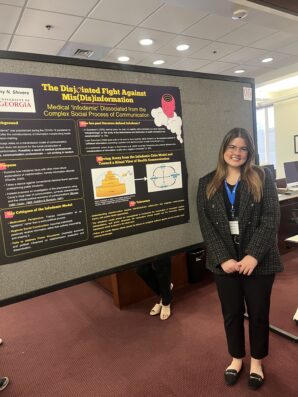
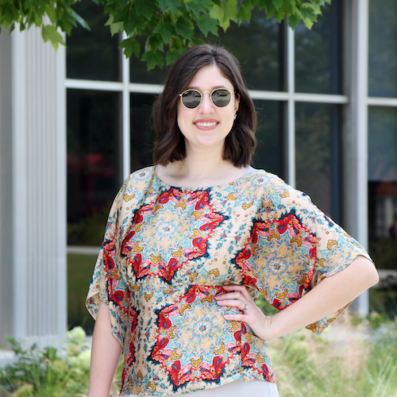
Brittany Shivers
Please provide a brief explanation of your dissertation topic and why it’s important to you.
I’m doing my dissertation topic on cancer misinformation. There are a lot of fake “miracle cancer cures” on social media. This misinformation is so harmful because people can forego conventional cancer treatment for miracle cancer cures, which can cost them their lives. There’s a lot of medical mistrust right now that has become politicized. I go to social media because that’s where people are getting their information. People aren’t reading; they are just scrolling their phone getting entertainment, and in the middle of that, they’re also getting misinformation. Because I’m from a rural area, I am invested in learning how people’s brains work depending on their cultural values and geography. I want to know, for rural versus urban Americans, how we can reach those people who have high levels of medical mistrust.
What is a fun fact about yourself, your research field or other related fields?
I’m going to be starting at Clemson in the fall as an assistant professor and it’s my dream job. I’m so excited. It was always my goal to work at a research institution and teach students. The coolest part about that job is that I’ll be the director of Tiger Student Media. They have a radio station, TV station, newspaper and two magazines. I’m going to be the director over all of that. My teaching load is a little less because I have that director role, so I can manage all my things. I am still expected to publish two research articles a year, which is typical for an R1 institution like Clemson. I’m going to be moving there this summer and getting started.
Lexie Litte
Please provide a brief explanation of your dissertation topic and why it’s important to you.
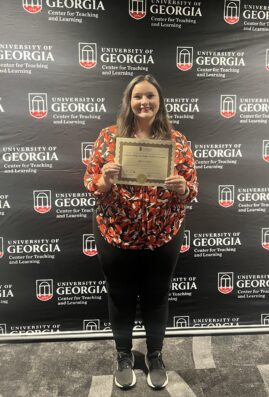
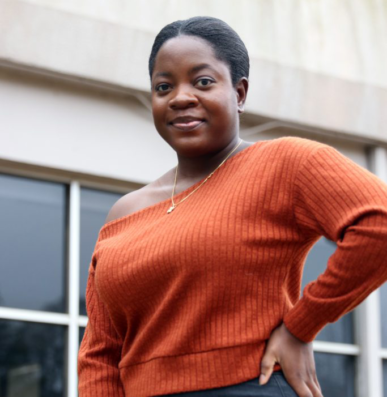
My dissertation research asks how newspapers, fan magazines, studio publicity, advertisements, photos, and other media forces represented Golden Age Hollywood actresses during their careers and later in retrospectives and obituaries. I’m interested in how media shape what scholars often call collective memory or national memory – how we come to remember (or forget) certain celebrities in American culture. Many competing definitions exist for the concept “memory,” and I attempt to reconcile some of the tensions (individual/collective, psychological/social) and question if memory is a useful term to describe this phenomenon.
What advice would you offer to someone considering a Ph.D. program?
First, ask why you want to pursue a Ph.D. If the answer is some combination of intellectual curiosity, a desire to research and teach and a need to gain such credentials for an academic or industry position, you’re on the right track. Second, choose a program where your contributions will be valued and fostered even further. Talk to faculty, current students and alumni to get a sense of the place and the program. Lastly, pursue the questions, research agenda and teaching areas that most interest you and make sure that you’ll be supported in doing so.
Brown James
Please provide a brief explanation of your dissertation topic and why it’s important to you.
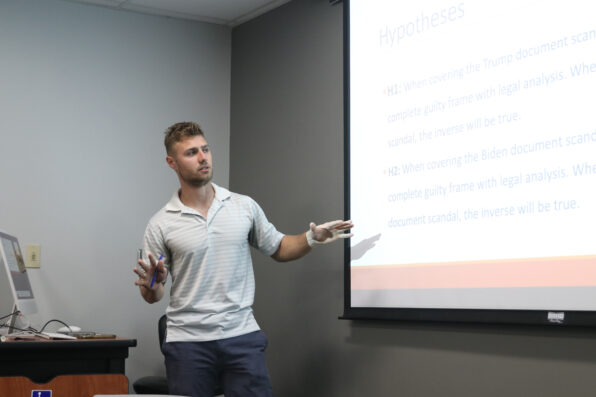
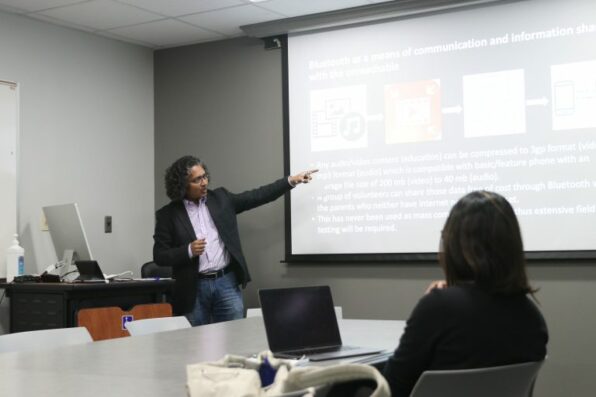
My dissertation is a verbal and visual rhetorical analysis of cable news framing of the U.S. Supreme Court by examining cable news broadcasts following the release of the Dobbs v. Jackson Women’s Health Organization opinion. Considering the influence over public opinion of the Court that news media has, it’s very important to me to see how the dramatic and overtly biased programming of cable news verbally and visually depicts the Court to the millions who watch.
What has been the highlight of your doctoral education so far?
The highlight of my doctoral career has been teaching my own classes and students in Reporting 1. I knew I wanted to pursue being a research professor in journalism and that the research side of things would always be interesting, but I didn’t know how much genuine fun and how fulfilling it would be to teach. My favorite lessons to impart to my students are the value of not being late and the seven P’s of Coach Graham (my students know what these are).
Sihao “Max” Zhou
What made you decide to pursue your Ph.D.?
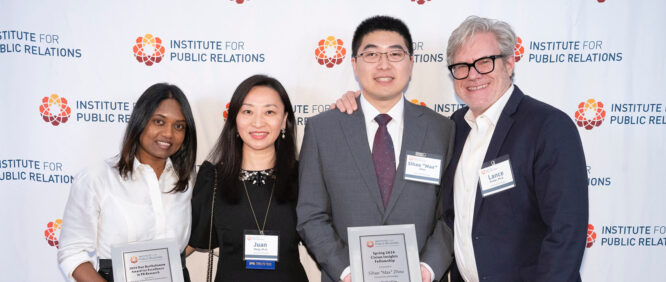
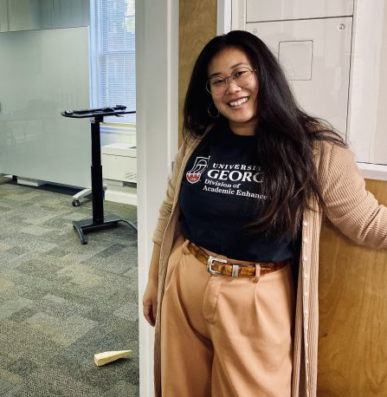
I decided to pursue a Ph.D. because of my passion for research in communication and public relations, particularly in social media analytics. My goal is to dive deeper into the evolving relationship between AI technology, social media, and public perception, and the Ph.D. journey gives me the tools and platform to explore these ideas in depth. Additionally, I aim to contribute by bridging the gap between U.S. and China, providing knowledge that serves both academic and industry field.
What has been the highlight of your doctoral education so far?
The highlight of my doctoral education has been the opportunity to collaborate with esteemed faculty and fellow researchers in different topics at Grady College. The level of intellectual exchange and support has been remarkable, and I have been able to contribute to projects that push the boundaries of our understanding of social media analytics and public relations.
 …
…


Where other alumni are working
Below is a sampling of what some of our other doctoral alumni are doing:
Dane Claussen
Jason Anthoine
George L. Daniels
Denise DeLorme
Eric Haley
Apply
Apply to join Grady College’s top-ranked Ph.D. program, designed to prepare students for academic careers in teaching and research or a professional career in industry or government.