

Crisis Communication Think Tank marks third international symposium
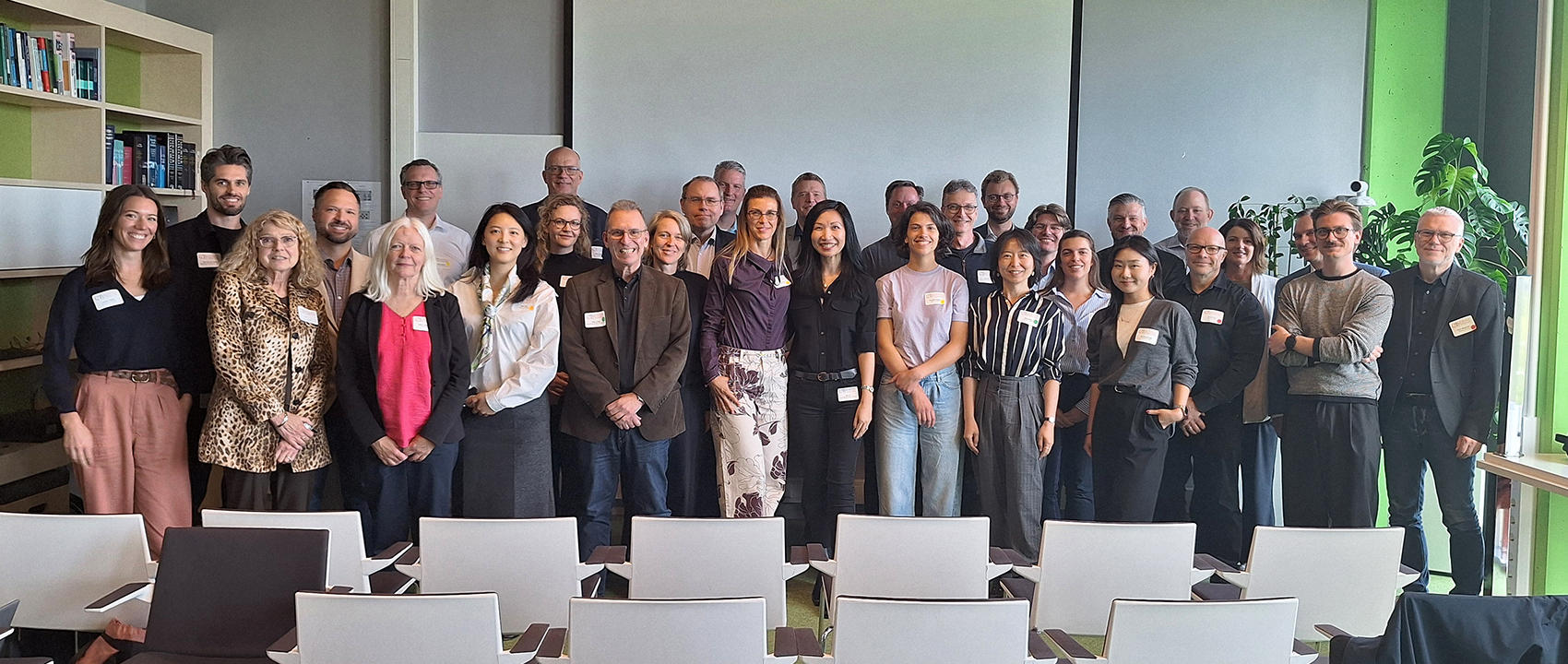
Crisis Communication Think Tank marks third international symposium
Amsterdam once again played host to the Crisis Communication Think Tank‘s (CCTT) Annual International Symposium, held this year on Sept. 21, in partnership with the Amsterdam School of Communication Research (ASCoR). Now in its third year, the transatlantic gathering has settled into a rhythm: bring scholars and practitioners into the same room, carry on the annual CCTT theme from the US to Europe, and let the conversation go where it needs to with shared vision and output to advance the field globally.
This year’s theme being Governance—a deliberate progression from 2024’s READINESS and 2025’s LEAP framework (Leadership, Evaluation, Alignment, Precision). Where those themes asked how organizations prepare and respond, governance asks a harder question: what structures need to exist before a crisis so that preparation and response are even possible? The four-pillar format returned, this time breaking governance into its constituent parts—definition, system, business, and information. CCTT director Yan Jin (University of Georgia) and international co-director Toni van der Meer (University of Amsterdam) opened the day.
The Symposium featured four dedicated sessions corresponding to the four dimensions of governance, each guided by leading academic and industry voices.
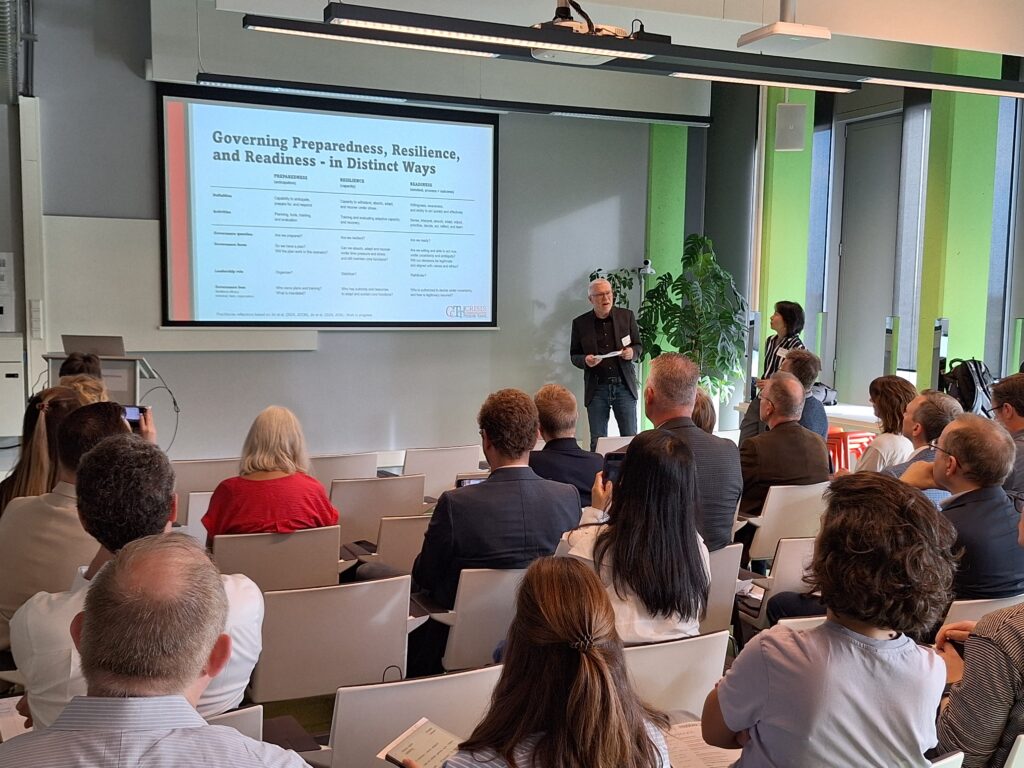
Defining Governance
The session, led by Timothy Coombs, Hans Mogensen and Yijing Wang, established a conceptual distinction between crisis management, episode-driven response, and crisis governance, the architecture of conditions that enable action. Participants developed a multi-level framework for governance spanning system, organizational, and information levels, aimed at moving beyond “symbolic readiness” toward actual operational capability. The panel concluded that strong governance requires a balance of value-driven leadership, simplified escalation processes, and the ability to temporarily flatten hierarchies to leverage expert knowledge during a crisis. As Hans Mogensen noted, “Without governance, organizations risk falling into symbolic readiness, where critical decisions are delayed or avoided altogether.”
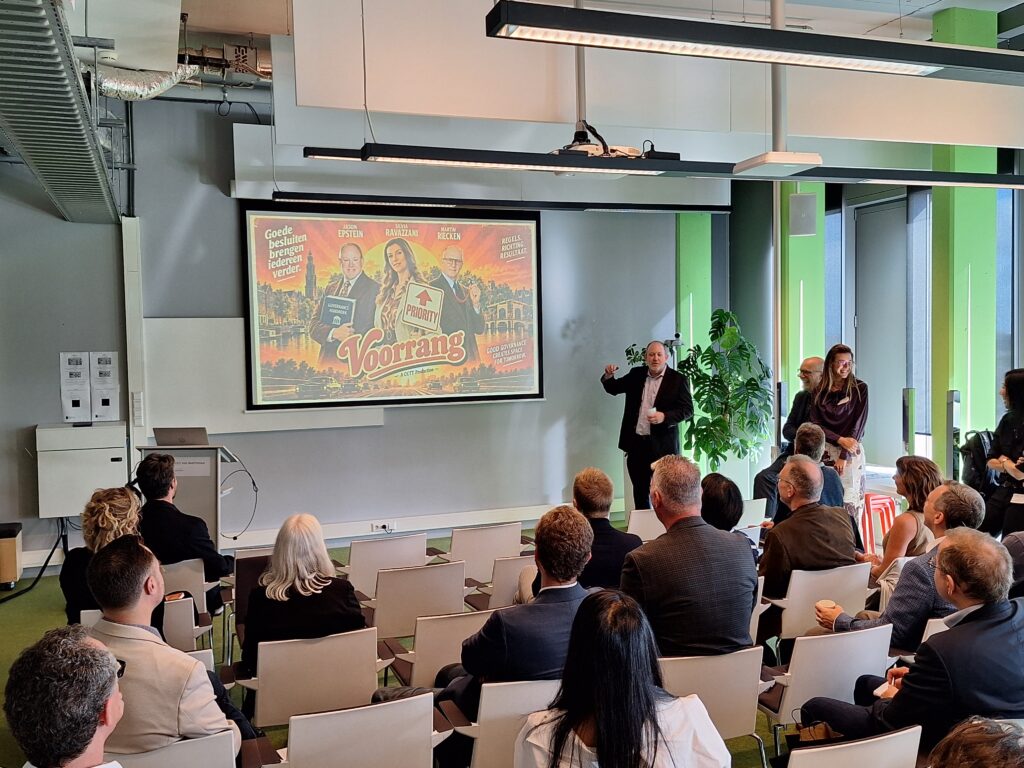
System Governance: The Systems of Systems
Led by Jason Epstein, Silvia Ravazzani and Martin Riecken, the session established that most reputational and operational crises are rooted in governance failures rather than simple technical errors. Described as a “system of systems,” the group concluded that effective crisis management requires a distinct shift away from business-as-usual governance toward a more agile, specialized structure that prioritizes rapid decision-making and trust over rigid corporate hierarchy.
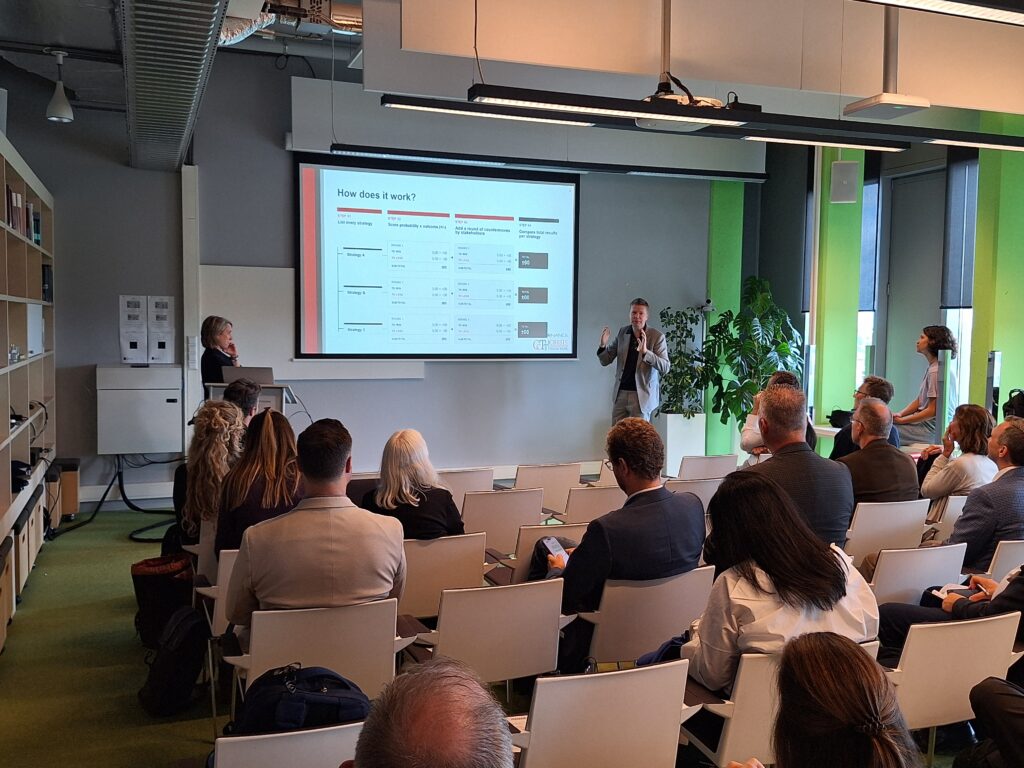
Business Governance: Bridging Theory and Chaos
The session, led by An-Sofie Claeys, Mike Pfarrer and Kristien Vermoesen as well as Raf Weverbergh, explored the tension between theoretical “optimal” crisis decision-making and the chaotic reality of high-stress environments. Participants discussed how cognitive biases and situational pressures lead to suboptimal responses and introduced game theory as a practical tool to move from intuitive, heuristic-based decisions toward analytical, strategic ones.
Information Governance: Trust and Independence
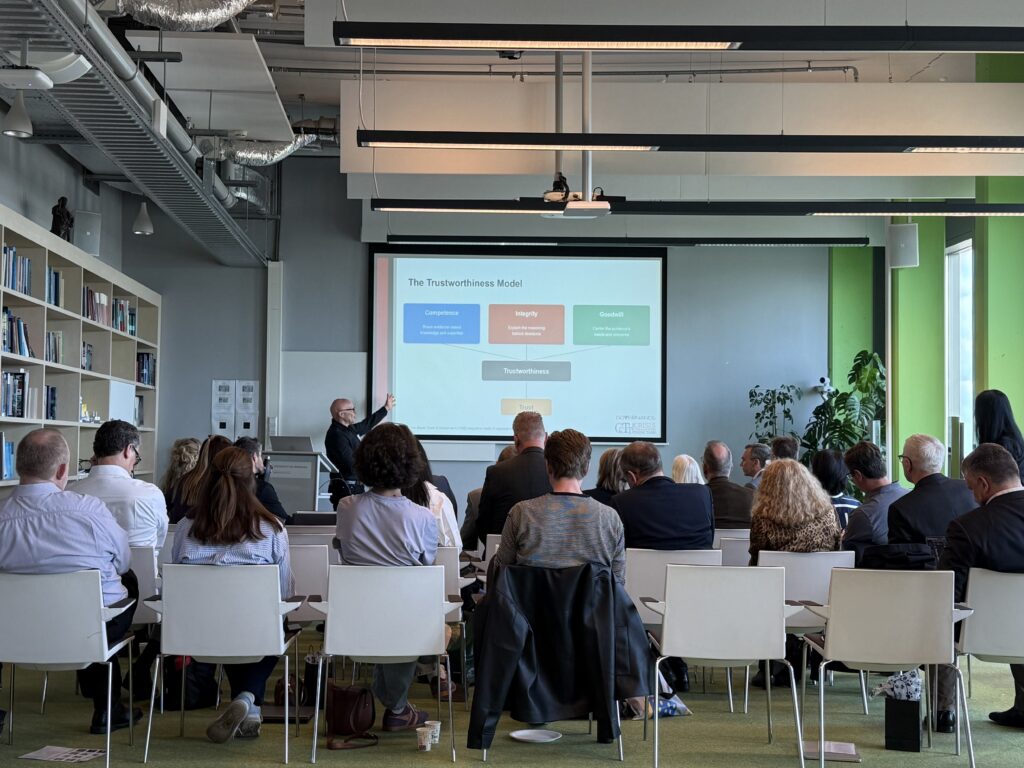
Led by Patrick Conner, Øyvind Ihlen and Winni Johansen, the session established that information governance in crises is fundamentally about maintaining trustworthiness through competence, integrity, and goodwill. Experts highlighted the necessity of strategic anticipation to navigate “arenas” of multivocality, along with the critical role of independent governance structures, such as special committees, in managing conflicts of interest during internal misconduct investigations.
Leadership Under Pressure: AI-Assisted Crisis Simulation Training
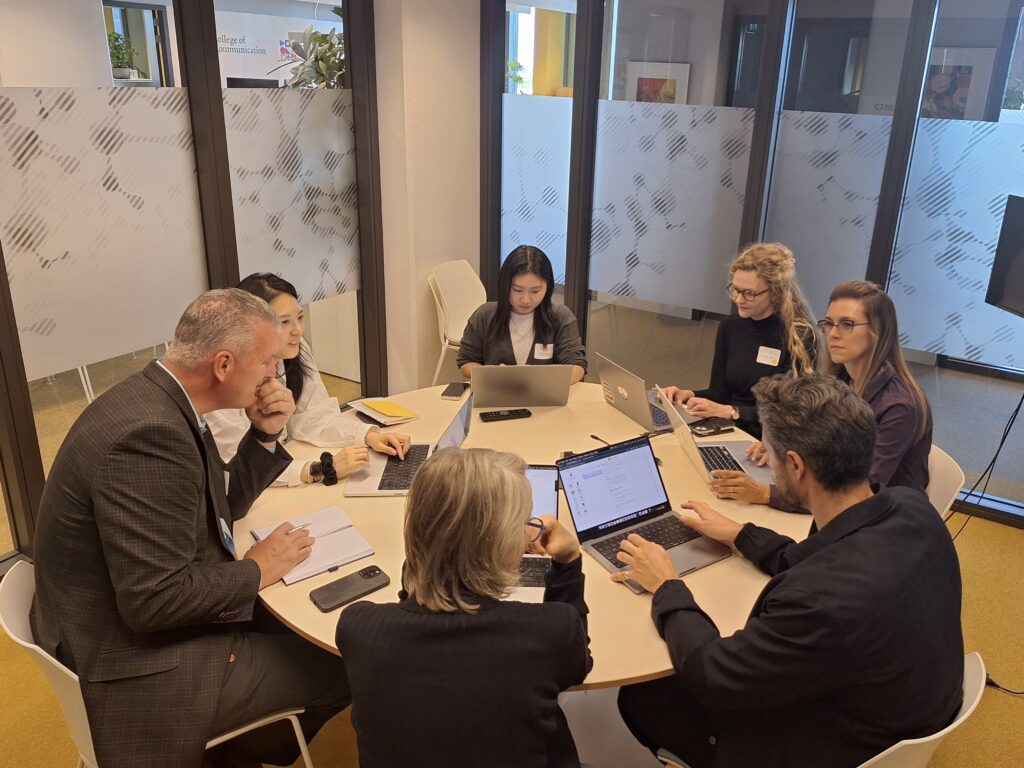
This year’s Symposium introduced a special session reflecting the rise of artificial intelligence (AI) within the industry: an AI-assisted Crisis Simulation Training, led by Torsten Rössing. Attendees were divided into groups and assigned distinct roles for a nearly two-hour simulation centered on a security-related crisis at a fictional company, offering a fully immersive experience in crisis preparation. The training gave both practitioners and scholars hands-on insight into the roles and responsibilities of a crisis management team.
Over the past two years, the CCTT International Symposium has grown in advancing the collaboration between academia and industry around the world. Bringing together voices and innovative research and practice from both fields, the 2026 gathering provided a rich, interactive space to think through and navigate the new frontier of crisis governance with confidence and success.
Author: Author: NaYoung Song, nysong@uga.edu