

Storm surge virtual reality simulation designed to save lives
Storm surge virtual reality simulation designed to save lives
Weather the Storm, a virtual reality simulation that takes users through the effects of storm surge to communicate its devastating and sometimes fatal consequences, is now available for download. This simulation is available thanks to a partnership with University of Georgia, Clemson University, Georgia Sea Grant and South Carolina Sea Grant and the National Oceanic and Atmospheric Administration (NOAA).
“Virtual reality simulations can be very useful for emergency preparedness training,” said Sun Joo “Grace” Ahn, founding director of the UGA’s Center for Advanced Computer-Human Ecosystems, which developed the experience. “They provide visceral experiences of natural disasters that are more detailed and emotional than traditional media because users see, hear and feel what is going on in the virtual world.”
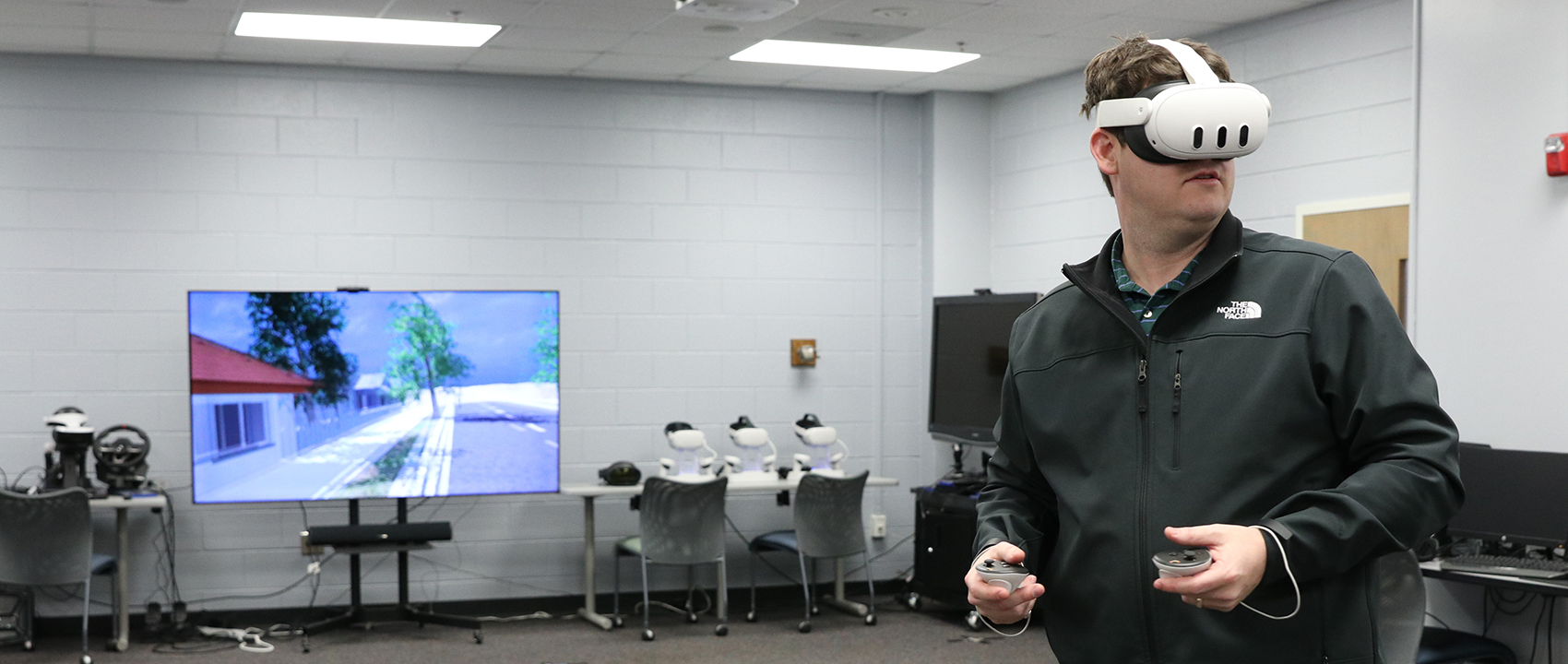
Weather the Storm will help coastal residents to experience and visualize the power of hurricanes and encourage them to evacuate when instructed to do so by local emergency management. The VR experience features a storm surge event inside a coastal home and is paired with video from Hurricane Ian representing water and powerful winds coming into the home. Viewers also receive helpful advice for items they should have on hand like batteries and drinking water.
According to the National Hurricane Center, when a tropical storm or hurricane approaches the coast, the wind can push large amounts of water onto land as storm surge. Between 1963 and 2012, storm surge was responsible for nearly half (49%) of direct deaths from Atlantic tropical cyclones in the United States. Data indicates that from 2013 to 2022, storm surge accounted for 11% of direct deaths from tropical cyclones, a decrease from the 49% observed between 1963 and 2012. This suggests that public outreach and improved forecasting have contributed to a relative reduction in storm surge fatalities. Storm surge remains a dangerous and often misunderstood threat, however. In 2022, 41 people died as a result of storm surge from Hurricane Ian.
“With hurricanes and other natural disasters becoming increasingly destructive, we must use every tool available to protect our communities,” said Matthew Browning, associate professor at Clemson University and co-director of the Virtual Reality & Nature Lab. “Weather the Storm can be a powerful way for the general public to take preparations seriously, allowing people to truly experience the dangers of storm surge before it’s too late.”
Weather the Storm was funded by the Weather Program Office’s Social Science Program at NOAA.
“This co-production took over 25 iterations, with hands-on field testing guiding the refinement of the simulation,” said Castle Williamsberg, a social scientist with NOAA’s Weather Program Office. “The entire team was committed to making it as realistic and scientifically accurate as possible, ensuring that people could truly understand the experience of storm surge in VR rather than facing it in the real world.”
Studies show that messages delivered through a VR immersive experience have a longer lasting impact versus messages delivered by video or written communication. The strong partnership among universities, Extension services and federal agencies allowed the development of this VR simulation that began as a small project funded by a University of Georgia Presidential Interdisciplinary Seed Grant.
“We have been studying how to leverage this power of communication within the virtual world to see if we can change behavior not just within the virtual world but outside of it, as well, so that people can be better prepared for high-risk, low-frequency events, like hurricanes,” Ahn said.
Ahn and Browning led the conceptualization and development of Weather the Storm, along with Olivia McAnirlin of Clemson, and Jill Gambill, formerly with University of Georgia Marine Extension and Georgia Sea Grant.
The VR application can be downloaded at the Center for Advanced Computer-Human Ecosystems website (https://www.ugavr.com/weatherthestorm). Step-by-step videos and PDF guides for downloading and using Weather the Storm and materials to complement the VR experience can also be found on the website. The application is designed to be used with a Meta Quest VR headset.
Editor: Sarah Freeman, freemans@uga.edu