

Ph.D. Profile — Lexie Little
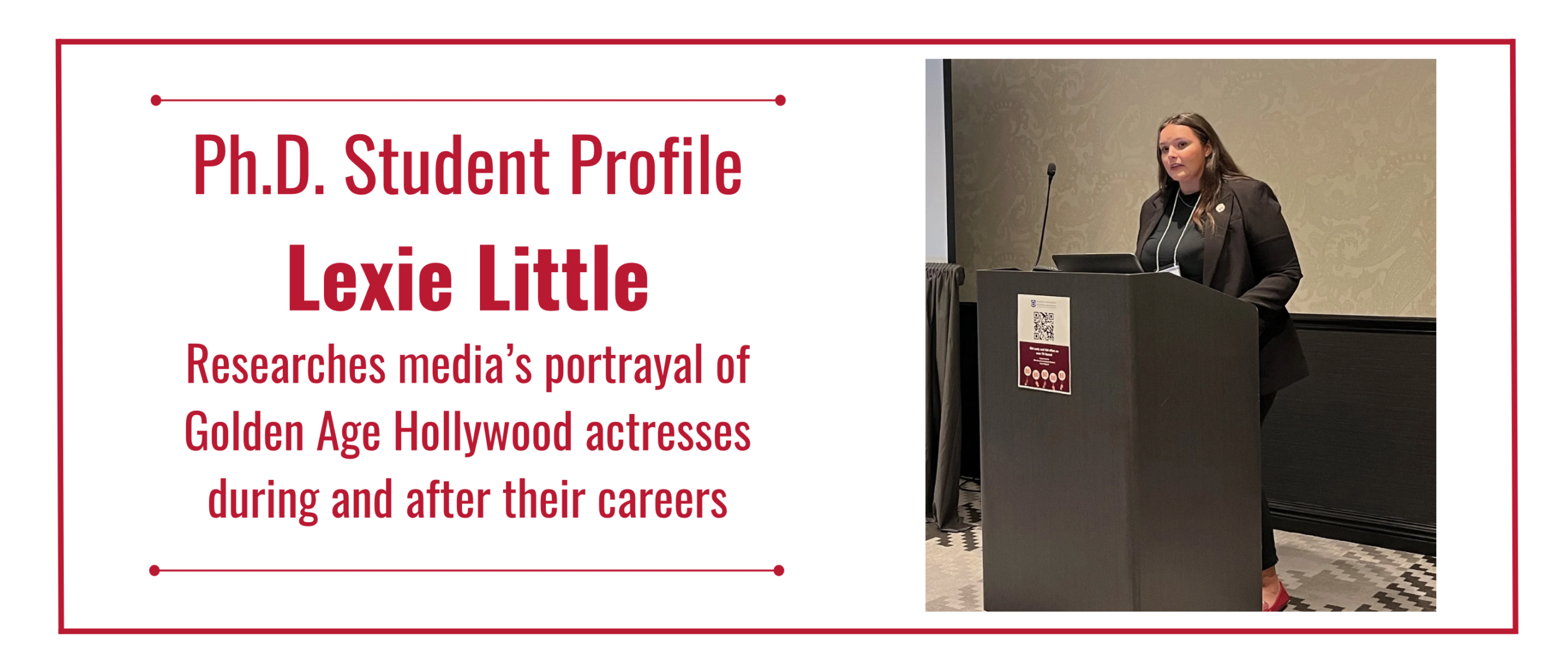
Ph.D. Profile — Lexie Little
Lexie Little’s (MA ’21, PhD ’26) research focuses on the intersections of mass media history, culture, celebrity and memory. Her work appears in peer-reviewed publications such as Journalism History and American Journalism.
Little recently completed her Ph.D. at Grady College and will graduate this May. Her dissertation, “The Women: Discursive Constructions and Renovations of Golden Age Hollywood Stars, 1927-1993,” used discourse analysis of over 5,000 print pieces and almost 3,000 photos and illustrations. The dissertation examines how competing cultural forces negotiated and renovated representations of five Golden Age Hollywood stars.
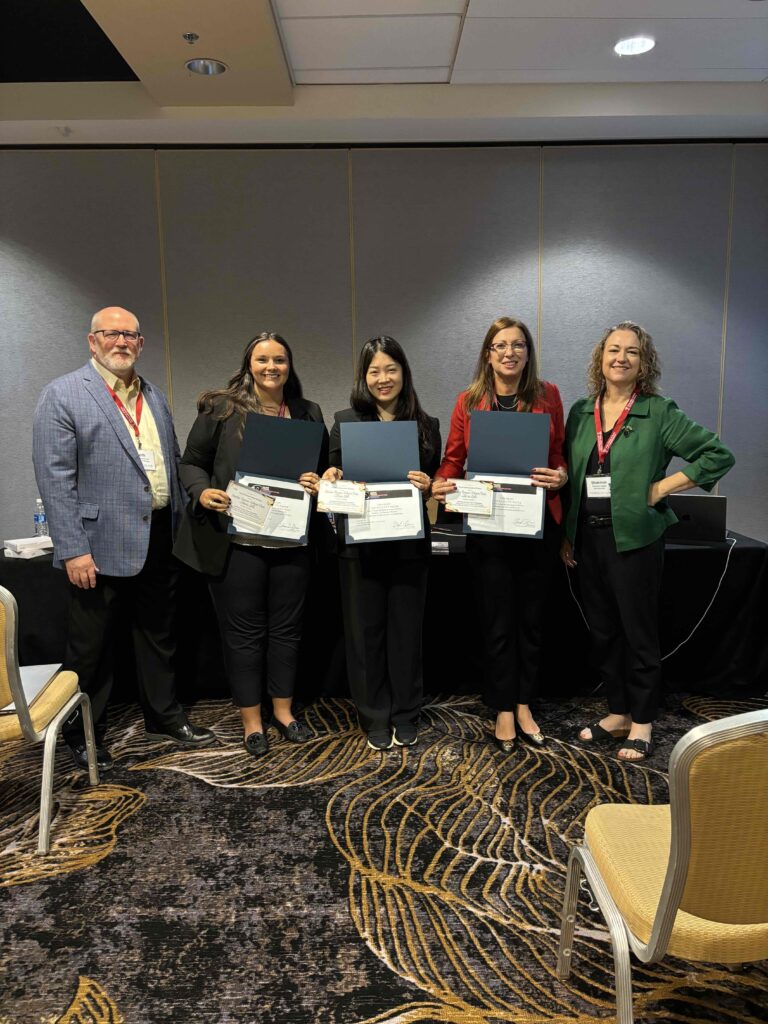
She currently teaches U.S. Mass Media History and previously taught Reporting I: Critical Skills for Reporting and Storytelling. She also received the Hearst Award in the Personality/Profile category for her research on Hollywood director Clarence Brown and won several other top paper awards for her examination of post-Civil War monuments.
Little previously worked as a magazine feature writer, sports columnist and strategic communicator. She will join the faculty at Murray State University as an assistant professor of journalism and mass communication this fall.
The following is an interview with Little.
What made you decide to pursue your Ph.D.?
As an undergraduate student, I took courses on media history; media, culture and society; and literary journalism that made me consider the roles of media in shaping culture as a whole way of life. I’ve always been fascinated by twentieth century film, television and celebrity journalism, and academic research provided a way for me to further that interest.
I also mentored students as an undergraduate editor-in-chief at our college news website and enjoyed teaching them the basics of AP Style, reporting, interviewing, writing, photography and social media strategy. While I first wanted to pursue a professional career as a journalist and a strategic communicator, that lingering desire to research and teach eventually brought me back to pursue an academic career.
(Photo submitted/Lexie Little)
Please provide a brief explanation of your dissertation topic and why it’s important to you.
My dissertation research asks how newspapers, fan magazines, studio publicity, advertisements, photos, and other media forces represented Golden Age Hollywood actresses during their careers and later in retrospectives and obituaries. I’m interested in how media shape what scholars often call collective memory or national memory – how we come to remember (or forget) certain celebrities in American culture. Many competing definitions exist for the concept “memory,” and I attempt to reconcile some of the tensions (individual/collective, psychological/social) and question if memory is a useful term to describe this phenomenon.
What other projects (research, teaching or otherwise) have you been involved with as a doctoral student and candidate?
In terms of research, I pursued historical projects such as studies on how media promoted the 1939 “Gone with the Wind” premiere in Atlanta, how letters to the editor discussed women’s rights surrounding the 1977 National Women’s Conference, historiographical studies focused on content and authorship in major media history journals and a forthcoming book chapter.
In terms of teaching, I served as a teaching assistant for Reporting III: Storytelling Across Platforms at the undergraduate level and Public Opinion at the graduate level before becoming instructor of record for Reporting I and U.S. Mass Media History.
What has been the highlight of your doctoral education?
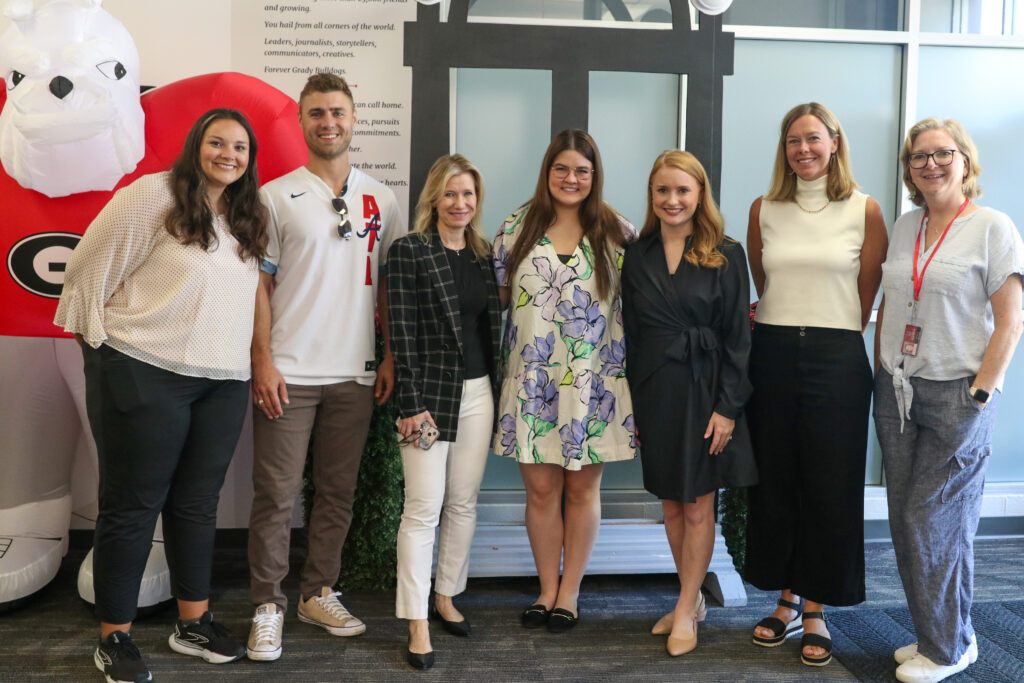
(Photo/Sarah E. Freeman)
The comprehensive exam process and writing the dissertation, to me, were the most significant moments. During that time, I really found my voice and perspective as a scholar. I could finally stake out my positions in the field and my subfields and work with abandon on the project I imagined for a decade. Comprehensive exams feel daunting, but I appreciated the opportunity to read and engage with materials and questions tailored to my interests. Comps give us the ability to elaborate what we make of everything we’ve encountered, and, though stressed out of my mind for a few months, I enjoyed the challenge.
What is a fun fact about yourself, your research field or other related fields?
I speak French. I studied French language and culture as a second undergraduate major. Many of the concepts and paradigms I now work with descend from French traditions. I plan to leverage that knowledge base in future studies.
What advice would you offer to someone considering a Ph.D. program?
First, ask why you want to pursue a Ph.D. If the answer is some combination of intellectual curiosity, a desire to research and teach and a need to gain such credentials for an academic or industry position, you’re on the right track. Second, choose a program where your contributions will be valued and fostered even further. Talk to faculty, current students and alumni to get a sense of the place and the program. Lastly, pursue the questions, research agenda and teaching areas that most interest you and make sure that you’ll be supported in doing so.
What has been your most memorable experience at Grady College?
The moments I cherish the most are smaller: coffee breaks with friends and classmates, lunches and dinners with Grady folks, office hours chatting about research and teaching, discussions during seminar, inside jokes with my students, etc. The people make the place for me, and the accumulation of every little moment with my mentors, classmates and students is what I’ll remember most.
Editor: Sam Tupper, samuel.tupper@uga.edu