

Grady College students cover the world’s largest sporting event
Grady College students cover the world’s largest sporting event
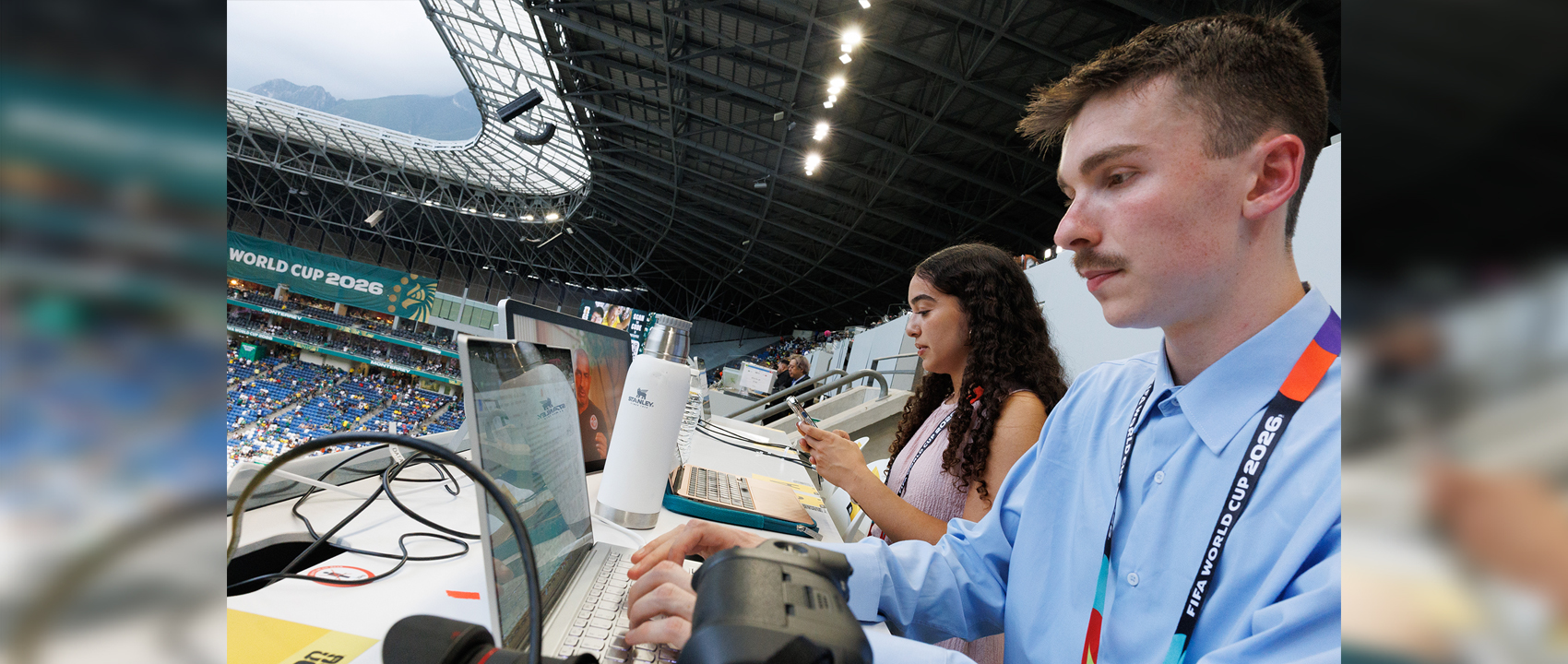
For 24 Grady College students, Summer 2026 meant traveling across North America using skills they learned in the classroom to report on the world’s largest sporting event, the FIFA World Cup. As credentialed journalists, the students published photos, videos, blogs and stories for two of the largest media organizations in the country: USA Today and The Associated Press, which also serves a worldwide audience.
Grady College students covered three knockout-round matches and 18 group-play matches in Miami, Vancouver, Mexico City, Seattle, and Monterrey, Mexico. Each group of students was accompanied by a Grady College professor who served as a mentor and liaison with the media outlets. The students spent nearly three weeks covering the matches, fan experience, culture and more.

“I honestly think this experience will be what drives my career forward,” says Maya Koluder-Ramirez, a fourth-year public relations student who covered World Cup matches in Monterrey for the AP. “This opportunity has given me so much – like living in a different country for three weeks and exploring that culture and being very immersed into it. And, to be able to write for the AP and see my features get picked up by major publications and be translated in different languages…I think that’s one of the coolest things.”
The Carmical Sports Media Institute has been partnering with the AP to cover global sports events since the 2016 Summer Paralympic Games in Rio de Janeiro. Carmical students have covered the past two Women’s March Madness tournaments for USA TODAY.
Vicki Michaelis, the John Huland Carmical Chair in Sports Journalism and Society, said the 2026 World Cup coverage was the most ambitious project the sports program has taken on.
“The students really shined, and they all brought amazing energy throughout every minute, every hour, every day,” Michaelis says.
Michaelis was with students in Vancouver and Seattle. Mark Johnson, the John G. Alston, Sr., Professor of Sports Media, was with students in Monterrey, Carmical Sports Media associate director Carlo Finlay was in Mexico City, and sports media instructor Sam Jones was in Miami.
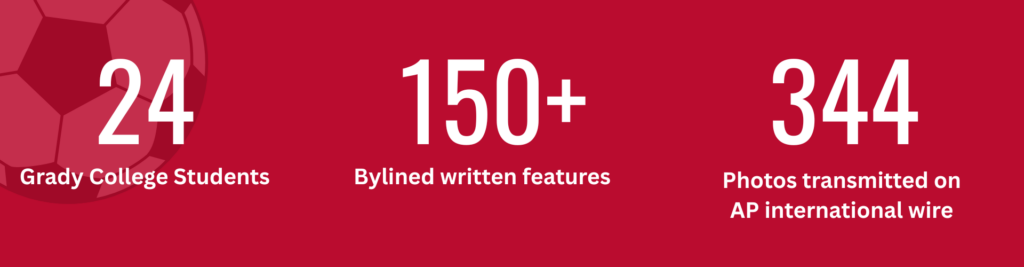
In total, the 18 students assigned to write about the matches, fans and culture produced more than 150 clips that were published around the world. The six photojournalism students live-transmitted 15,077 images during World Cup matches that Johnson edited. Nearly 344 images were sent out on the AP wire around the world.
Preparation and Practice
The students were selected for this experiential learning opportunity through an audition process covering a Georgia Gwinnett College soccer match under deadline last November.
Once the students were selected, they enrolled in a spring-semester “Covering Major Sports Events” class, where they studied World Cup history and traditions, researched players and teams and covered high school matches to refine their skills. The photojournalists worked with Tony Kurdzuk, a representative from Canon, who taught them how to use the larger telephoto lenses and sophisticated camera kits lent to them by Canon for their World Cup work.
“That preparation really helped and it wasn’t as overwhelming as I expected,” says Kaleb Tatum, a May graduate who covered the Vancouver matches as a photojournalist. “It was really cool to be there.”
Many of the fundamental skills were those they have learned throughout their time as students.
“These types of events are not field trips. It’s journalism and it draws on every skill set that we teach in the building,” says Johnson, a photojournalism professsor.
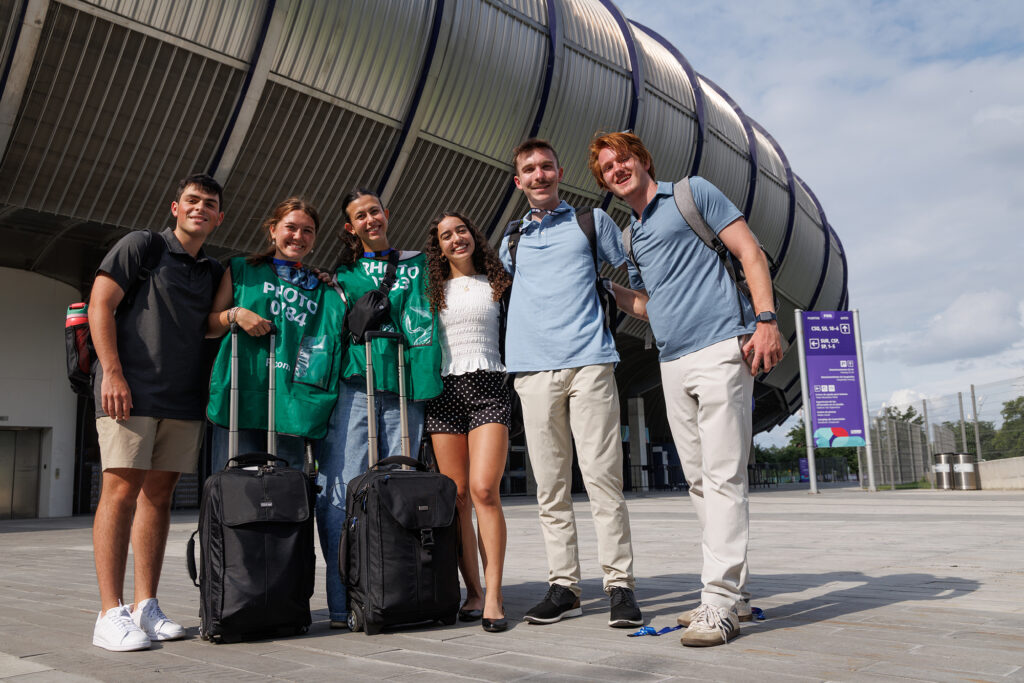

Center Photo: Soccer players from Sweden celebrate during a Sweden versus Tunisia World Cup match in Monterrey in June 14, 2026. (Photo/Sofia Yaker)
Right Photo: Team Mexico City included Tatum Esparza, Jack Little, Carlo Finlay, Massimo Bellew and Ashtin Barker. (Photo/Ashtin Barker)
Professional Interaction
One of the biggest benefits of an experience like this is interaction with other professionals.
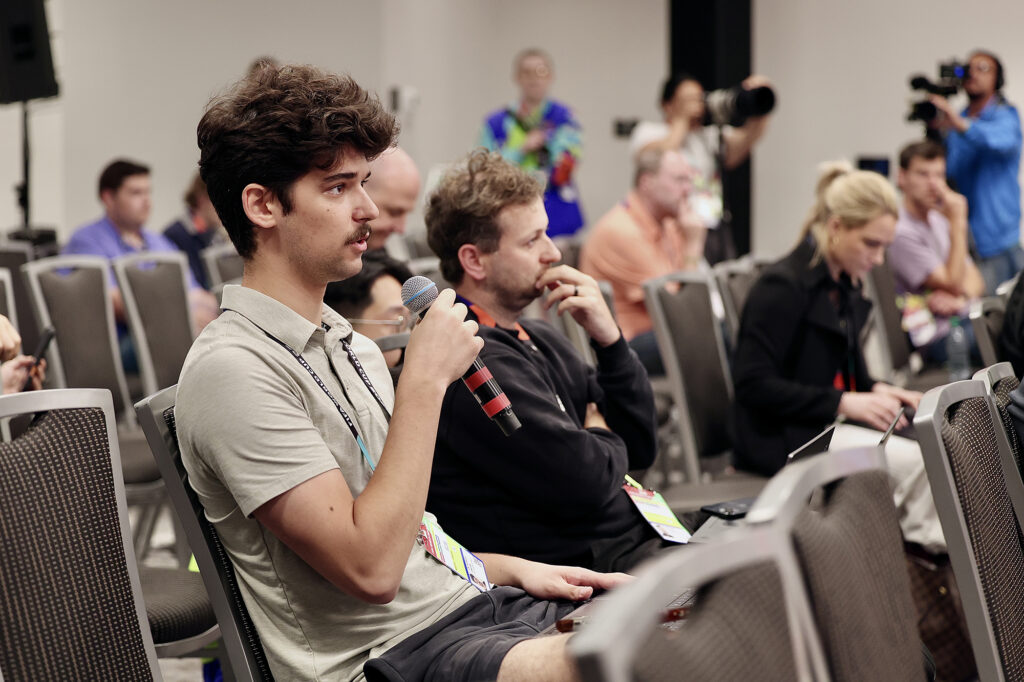
Stepping into her first press conference in Miami, Katie Fryburger, a fourth-year journalism student, noted that she and her fellow students were the youngest people in the room, but media professionals helped them overcome their learning curve quickly.
“We got to make some connections with those people,” Fryburger says, “and, when you do that, they help you out along the way.”
Some journalists offered students inside information about where teams were practicing, while others allowed the students to move up front to get a better view in the mixed zone, where the athletes stop for post-match interviews. Like all other credentialed journalists, the students asked questions during press conferences and covered matches.
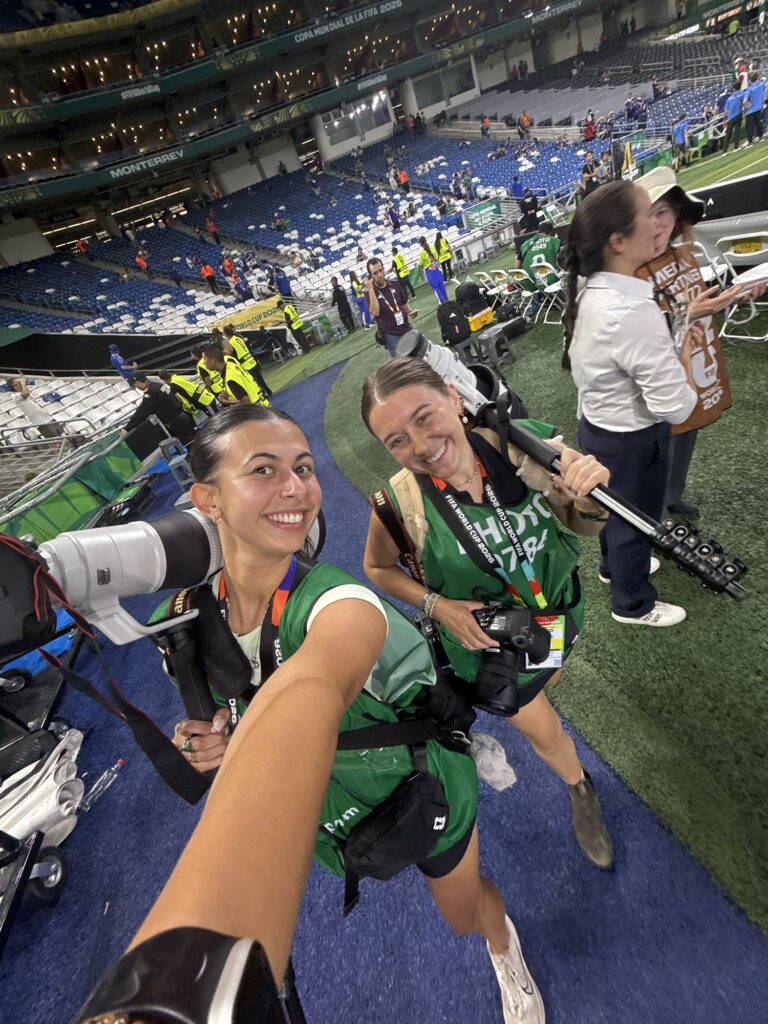
“Everyone there was so nice and just wanted to help,” Sofia Yaker, a fourth-year journalism student, says of the professional journalists she worked with as a photojournalist in Monterrey. “Being with them really helped us get more comfortable with being there, too, because we’ve never been on that big of a stage before.”
Johnson says this type of connection with the industry pays dividends in the future.
“Feeling like you’re part of that community makes all the difference,” Johnson says. “It makes you feel like, ‘yeah, this is some place that I can be.’”
Shared Experiences
One of the cultural elements that makes the World Cup so popular is the shared experience of its many fans.
That shared experience is what connected the sports media students, as well.
“Something that made the whole process of covering these games really good was the chemistry that the group had,” says Derek Oliveros, who graduated in May and covered the matches in Vancouver as a writer.
No matter the location, close bonds formed by the students started each day at breakfast and wrapped 12 or more hours later sharing experiences over late dinners.
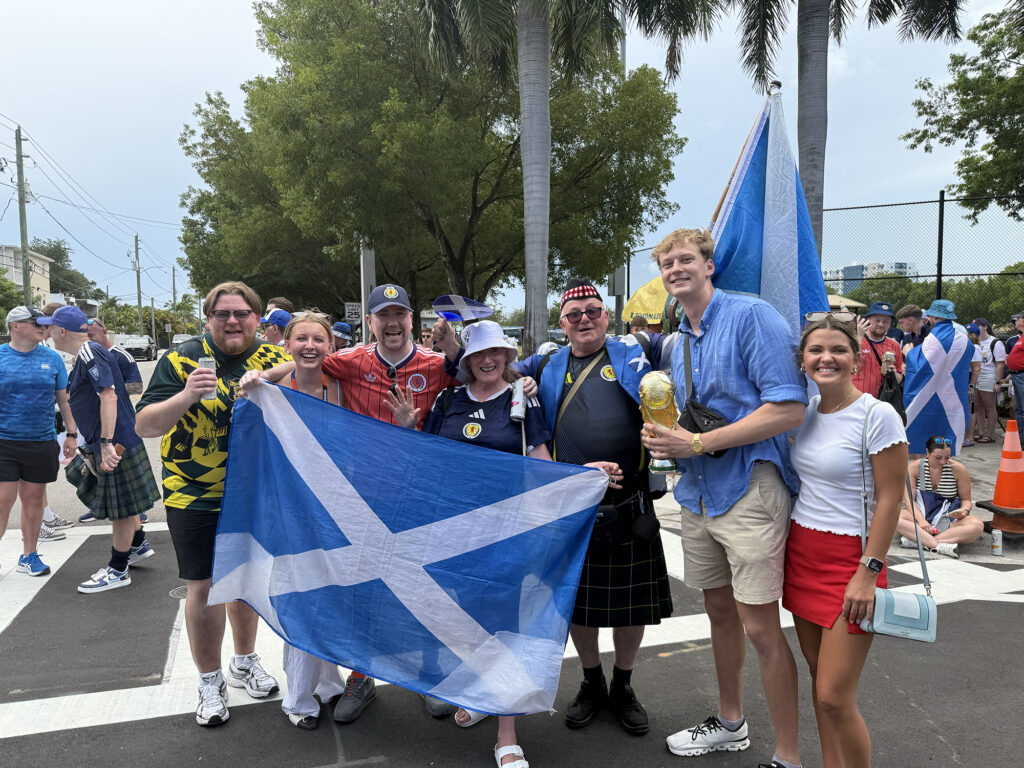
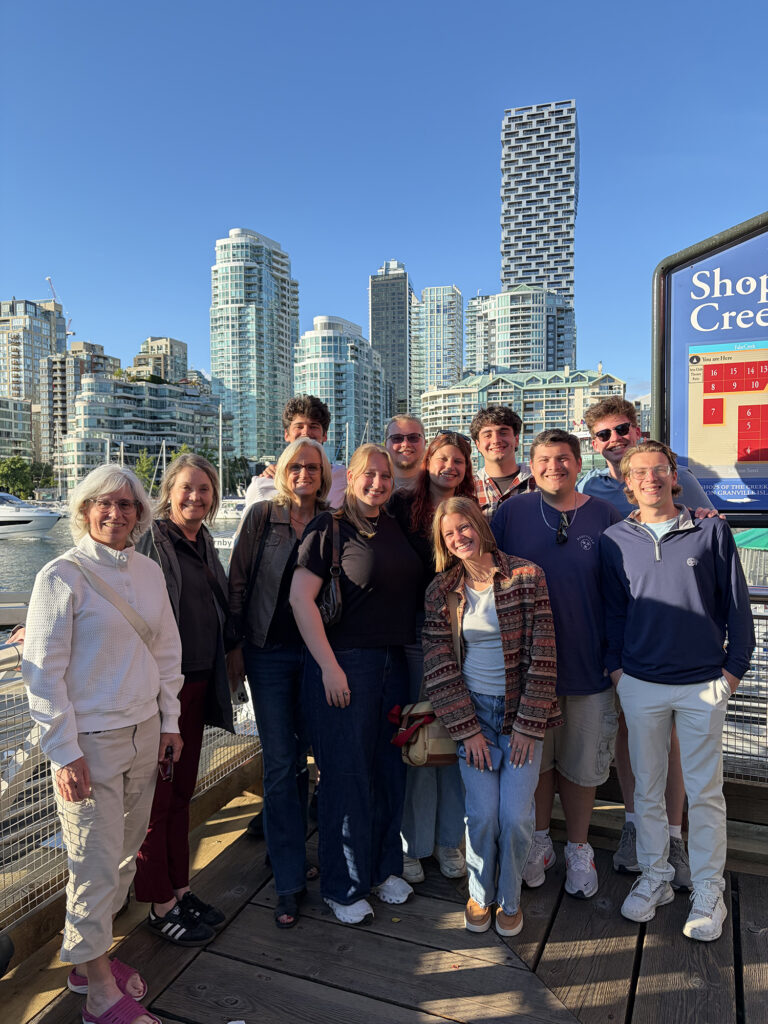
Covering so many different places, each group of students experienced different fan cultures and local traditions together. While the Miami group enjoyed Cuban sandwiches on South Beach and joined the Scottish Tartan Army for a spirited march from Little Havana to Hard Rock Stadium, the Vancouver group enjoyed Shawarma sandwiches from a street vendor and explored Stanley Park. A few students from the Vancouver group spent the last day together scaling the mountain they viewed from their stadium during the matches.
Building on a model
UGA sports media and visual journalism students also have covered the 2023 Women’s World Cup in Australia and the 2024 Paralympics in Paris.
Each experience has been supported by the John Huland Carmical Foundation, which provided funds for lodging and ground transportation, while the students, with the help of some experiential learning funds, pay for their airfare to and from the host city and their meals.
“Our goal as always is to make this accessible to everyone and for there to be no financial barriers to students,” Michaelis says. “This is the kind of opportunity that really goes beyond just going to another country, because it does so much for them and their development as journalists and as storytellers. It helps them build a network and build confidence that they can operate in these chaotic, tight deadline situations.”
This 2026 World Cup experience was also supported with help from the Knight Chair in Visual Journalism.
The sports media faculty have coordinated the experiences and nurtured these media partnerships. It’s uncommon that students have opportunities to produce content for major media organizations, which Michaelis says speaks directly to the quality of coverage students have produced over the years.
“We’re going to media outlets and saying, ‘We’d really like to do this with you,’ and they’re meeting us halfway saying, ‘Yeah, we’ve had great experiences in the past,’” Michaelis says.
Michaelis continues: “Our goal is to make sure as many students as possible get to have these experiences because they’re life-changing. Seeing those moments when students realize they can do something they didn’t know they could, in a space where they never thought they’d be — to be able to be witness to that is the most special part of my job, to be honest.”
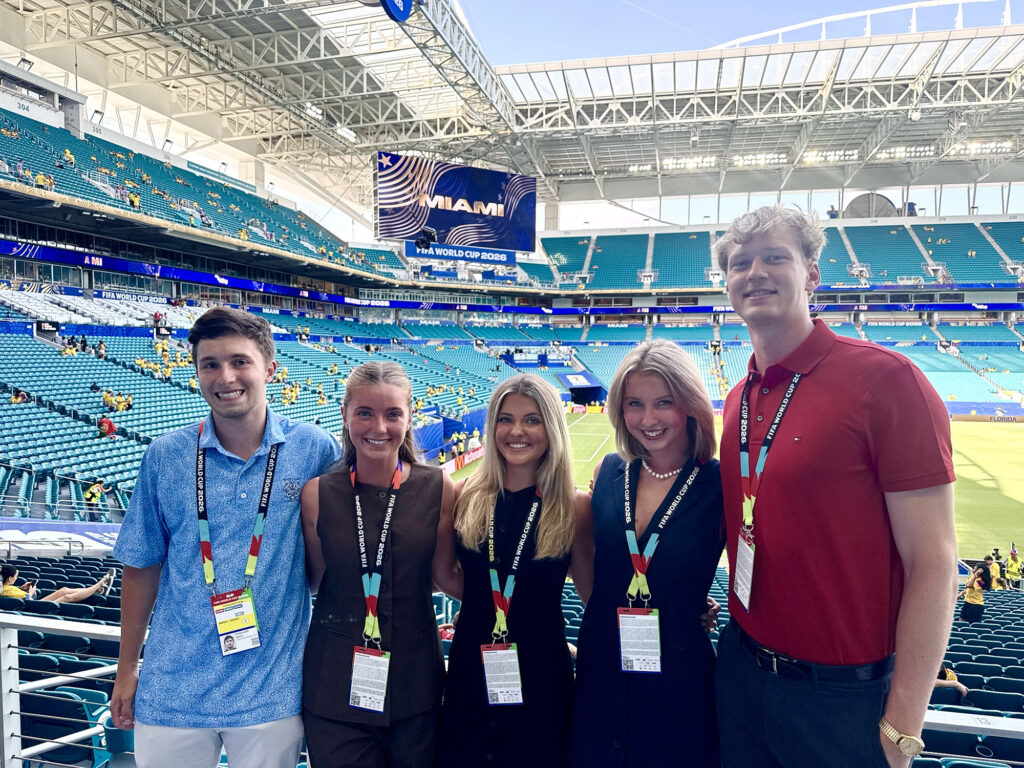
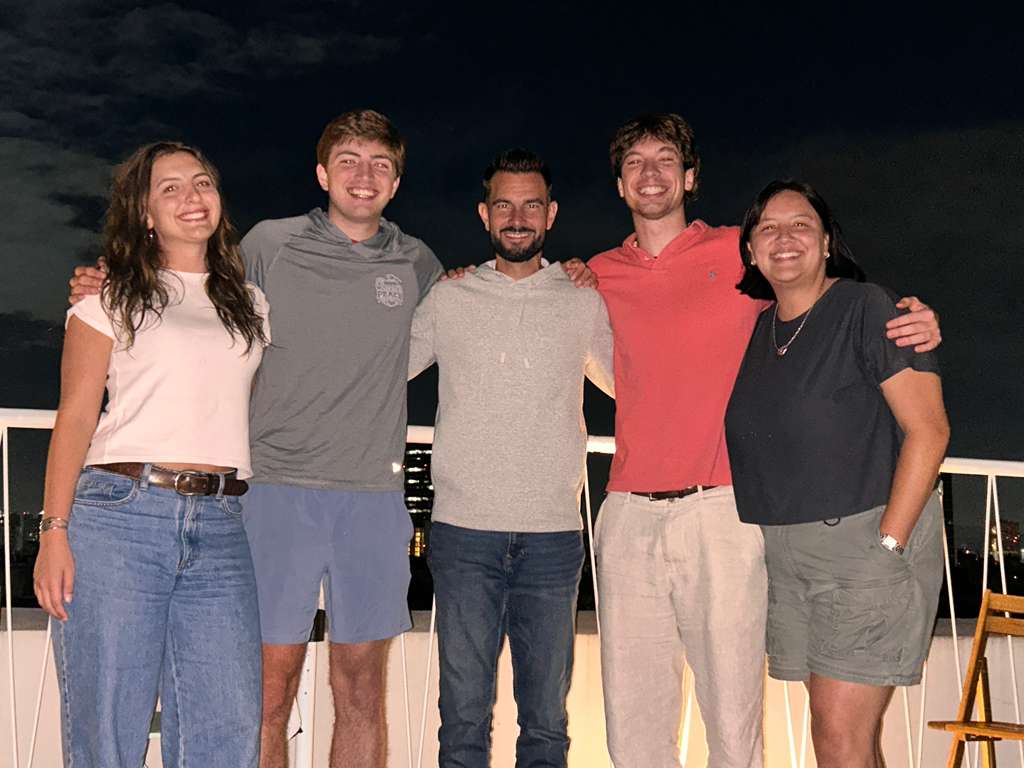
Center Photo: Zachary Pascuzzi, Erin Kirby, Katie Fryburger, Gracie Fisher and Evan Kane at the Hard Rock Stadium, home of the World Cup matches in Miami. (Photo/courtesy of Katie Fryburger)
Right Photo: Erin Kirby (second from left), Evan Kane (second from right), and Katie Fryburger (far right) interview Scottish fans on June 22 ahead of the Scotland vs. Brazil matchup. (Photo/courtesy of Katie Fryburger)
Moving on after World Cup
With adrenaline still flowing and memories fresh, many of the students returned to enjoy the final World Cup matches on television, watching with friends and family.
They still texted their traveling partners daily, reliving the shared experience that was so unique.
Many brought home mementos to remember their experience. Yaker has her photographer’s bib already displayed in her Athens apartment, while Oliveros cherishes his press pass.
“I think this is something I’m going to hold on to forever,” Oliveros says. “And, I think it’s still going to be super cool looking back on it 20 years from now that I was able to do this and I have the press pass to prove it.”
Johnson is most proud of the impact an experience like this has on the students.
“The Carmical Foundation’s continued support of our students is changing the lives of the kids and improving the quality of reporting across the country right now,” he says. “There’s nothing like being on the pitch or in the tribune,” he concluded, talking about the area on the field where the photographers made their pictures and the tribune area that was one of the highest vantage points in each stadium. “Sitting in a classroom will never replicate those World Cup experiences.”
Yaker says that covering the World Cup solidified that she has made the right choice following this career.
“I just couldn’t stop smiling,” Yaker says of her time covering the matches. “I felt like I just totally belonged there.”
Author: Sarah E. Freeman, freemans@uga.edu