

Community journalism partnerships educate students while serving media outlets
Community journalism partnerships educate students while serving media outlets
Learning to produce community journalism in a clear, ethical, fair and balanced manner is a foundational skill taught at Grady College, and one that continues to expand.
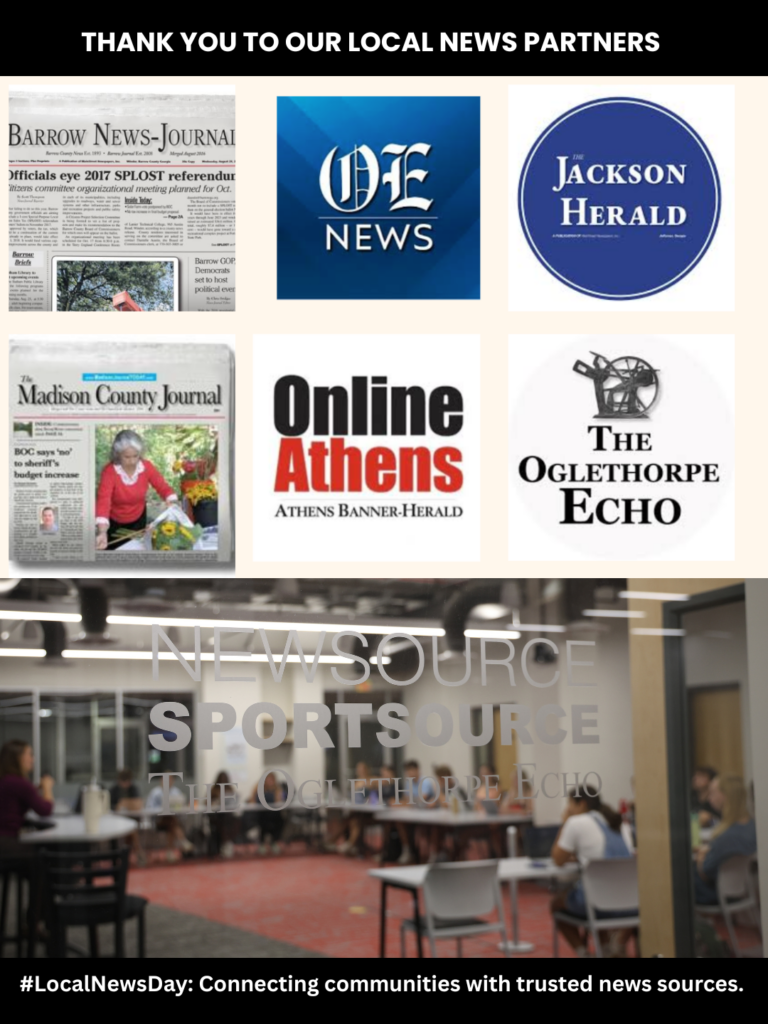
New partnerships with local media outlets including The Athens Banner-Herald, Mainstreet News, and The Oconee Enterprise provides opportunities for students to publish stories in these local news outlets from Grady Newsource. The Oglethorpe Echo partnership has been going strong since November 2021.
Through Grady Newsource and The Oglethorpe Echo capstone courses, students learn the fundamentals of research, interviewing, reporting and telling community stories.
Grady Newsource is the only broadcast news outlet in the five-county region it serves. It also reaches people in Clarke, Oconee, Barrow, Jackson and Madison counties with nine digital products.
The news-academic partnership between Grady College and The Oglethorpe Echo is a course where students write, edit and produce issues of the community newspaper every week under the direction of journalism professors and editors. Since the collaboration was created, the newspaper has grown to include an online and social media presence, as well. Nearly 200 students have benefited from the partnership with The Oglethorpe Echo Legacy Inc. to date.
“These types of opportunities are huge because what really matters is that people get news and information that help them make decisions about their lives that help them to connect to the people around them,” said Amanda Bright, director of the Cox Institute Journalism Innovation Lab.
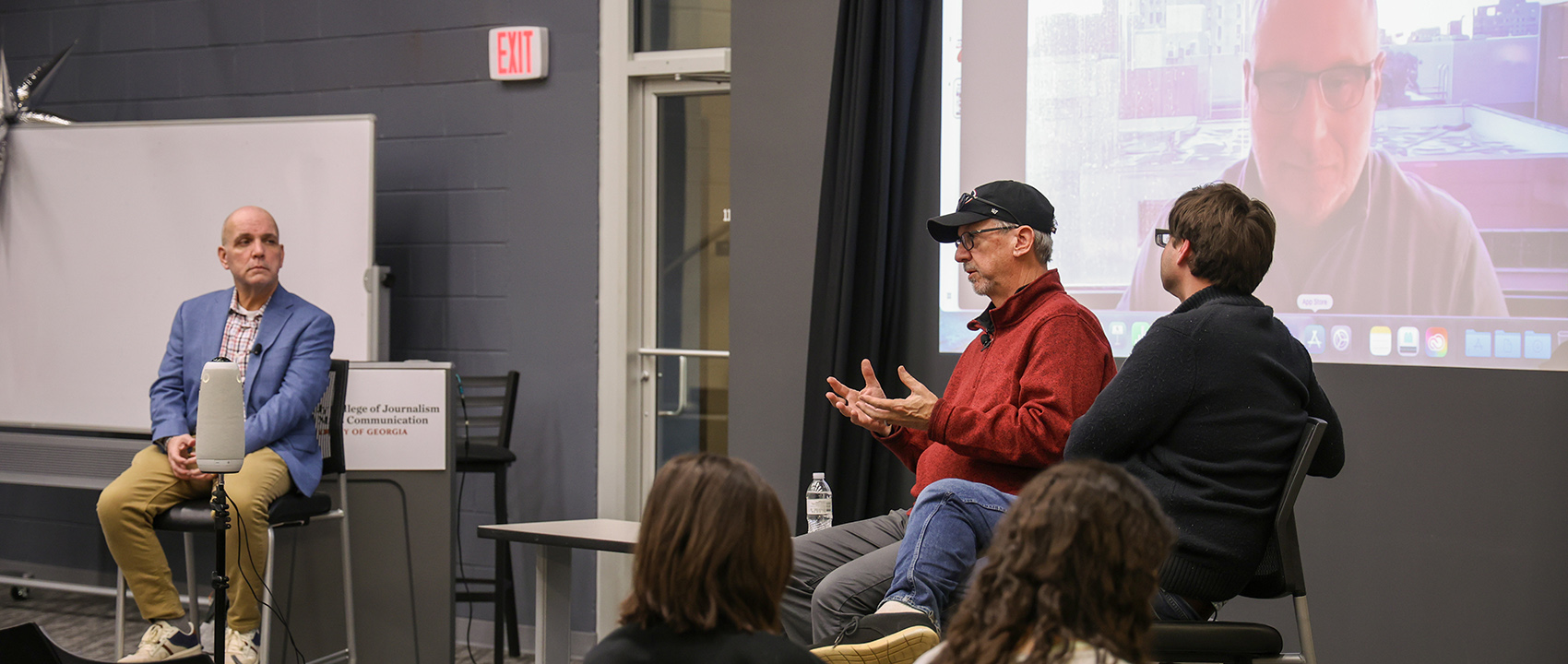
During a community journalism panel in January, several local editors gathered to give advice to students about how they work with journalists and what they seek in new colleagues. Panelists included Andy Johnston (ABJ ’88, MA ’21) of The Oglethorpe Echo; Donnie Fetter of the Athens Banner-Herald (via Zoom); Mike Buffington (ABJ ’80) of the Mainstreet News; and Michael Prochaska (ABJ ’12), formerly of The Oconee Enterprise.
Essential skills for today’s journalists
All of the editors on the panel agreed that today’s journalists need a wide variety of skills including writing, visual storytelling, layout and broadcast.
Buffington believes that today’s journalists need to be renaissance people. “You need to do a little bit of everything,” Buffington said. “The more you can do, the more valuable you are.”
Other areas where students can hone their skills are:
• Technical proficiency: Mastering content management systems, page layout and digital-first content like vertical video.
• Government literacy: Understanding the language of local government, such as taxes, budgets and audits.
• Journalistic instinct: Developing the ability to identify the most important stories for the public, rather than just reporting events chronologically. “As an editor, it’s a lot easier for me to help someone improve their writing skills than it is to help them hone journalistic instincts,” Fetter said. “Being able to sit through a three-hour meeting, and recognize, okay, this is what’s important. This is what people need to know. That’s a much harder skill to teach.”
How is AI used in today’s newsroom
The impact of AI was also addressed by the panelists, with an emphasis that using AI is controversial in the industry but can be used to improve efficiencies to help with research, routine tasks like proofreading and copy editing and office tasks like budgeting and billing.
“Learn now how to use AI,” Buffington said. “It’s here. It’s not replacing anyone. It’s making it more efficient because in a small-town paper you are doing a lot of different things.”
Buffington advises students to learn to use AI as an assistant to do some of the smaller, routine tasks so that mental energy can be used to address big things.
Buffington also predicts that within five years, AI will handle 99% of newspaper layout, automatically placing stories on appropriate pages based on their content.
“Learn what’s good about it; learn what’s bad about it, because there are some bad things about it, but learn how to use it because it is going to…make a huge difference in our industry.”
This feature was written with the assistance of AI to organize and summarize transcripts from this discussion. It was written and edited by a human.
Author: Sarah Freeman, freemans@uga.edu