

Cox Institute hosts visual literacy scholar for Spring 2026 News Literacy Certificate Celebration
Cox Institute hosts visual literacy scholar for Spring 2026 News Literacy Certificate Celebration
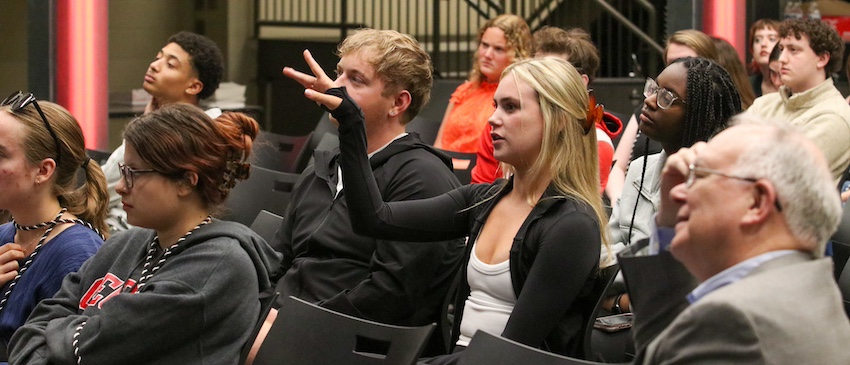
University of Georgia students gathered with faculty and peers for the Spring 2026 News Literacy Certificate Celebration. More than 40 attendees marked the achievements of graduating certificate students and explored new approaches to engaging with visual media.
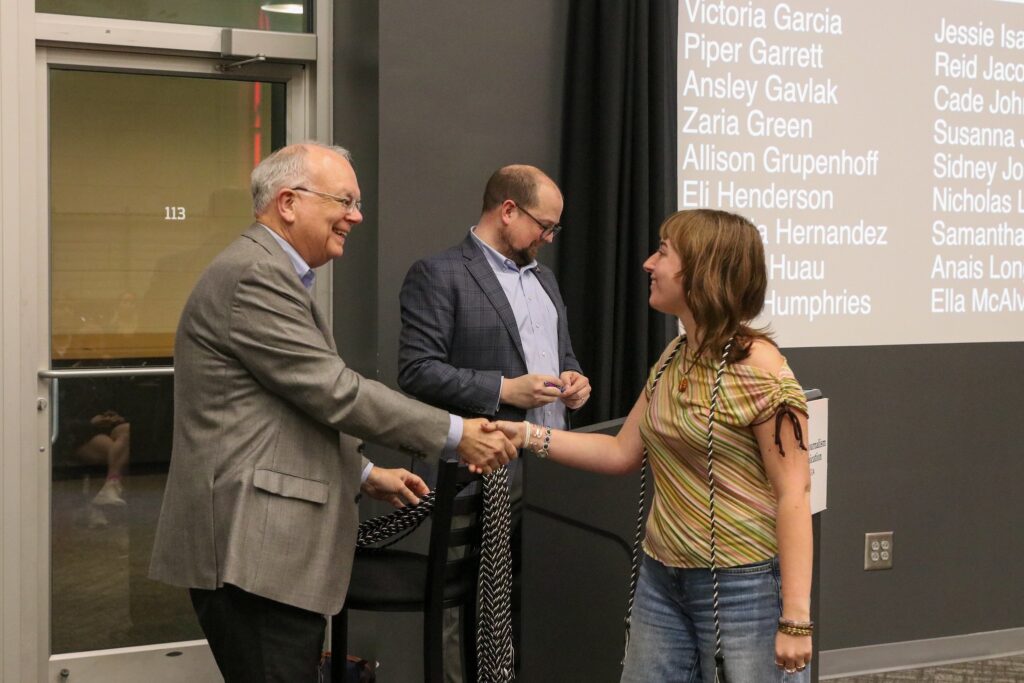
The event recognized students completing the certificate this spring and summer, as News Literacy Certificate Director Dr. Kyser Lough and Cox Institute Executive Director Dr. Keith Herndon presented graduation cords to honorees.
Dana Statton Thompson, a research and instruction librarian and assistant dean of libraries at Murray State University, served as the event’s keynote speaker. Her presentation, “Training the Eye: The Case for Slow Looking,” shared visual literacy practices designed to increase critical thinking and image engagement.
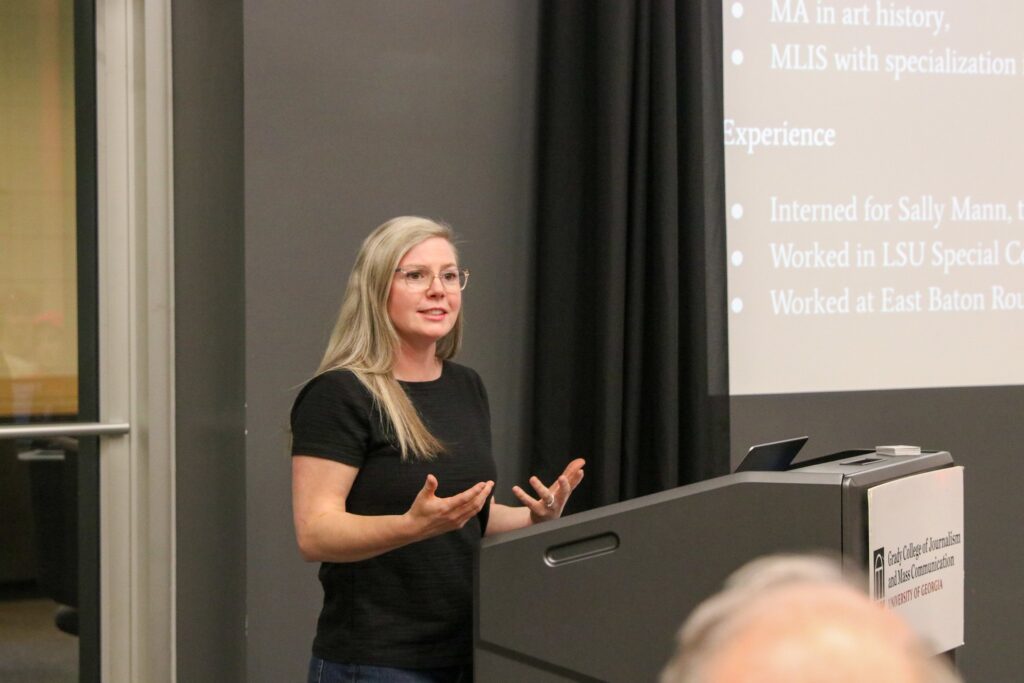
Thompson’s work focuses on the intersection of visual literacy and news literacy, emphasizing how images work as powerful sources of information. She defined visual literacy as a set of skills that enables individuals to find, interpret, evaluate and create visual media.
Through guided exercises, Thompson encouraged students to slow down and examine images more intentionally. She taught “slow looking,” a more intentional observation that encourages curiosity and deeper understanding. The practice creates a loop where “the more you look, the more you see,” according to Thompson.
Students participated in visual thinking exercises during the session, including “Visual Thinking Strategies” and the “Question Formulation Technique,” both of which emphasize observation, discussion and inquiry. These activities allowed students to share what they see and support their interpretations with evidence and alternative perspectives.
Thompson also led students through her “Digital Image Guide (DIG) Method,” a structured approach to analyzing images in four stages – analyzing, interpreting, evaluating and comprehending. The method encourages students to determine an image’s source, message and reliability while reflecting on how their assumptions and biases might shape their judgments.
Beyond these exercises, Thompson also demonstrated Google’s “About this Image” feature, a tool designed to give context on an image’s origin, usage and potential manipulation. The feature allows users to track when an image first appeared online, see how it has been used across sources and determine whether it might have been generated or altered using artificial intelligence.
Thompson said these tools are becoming increasingly important in digital spaces where images can be easily manipulated or taken out of context. By combining visual literacy with news literacy, students can more effectively evaluate the credibility of online information.
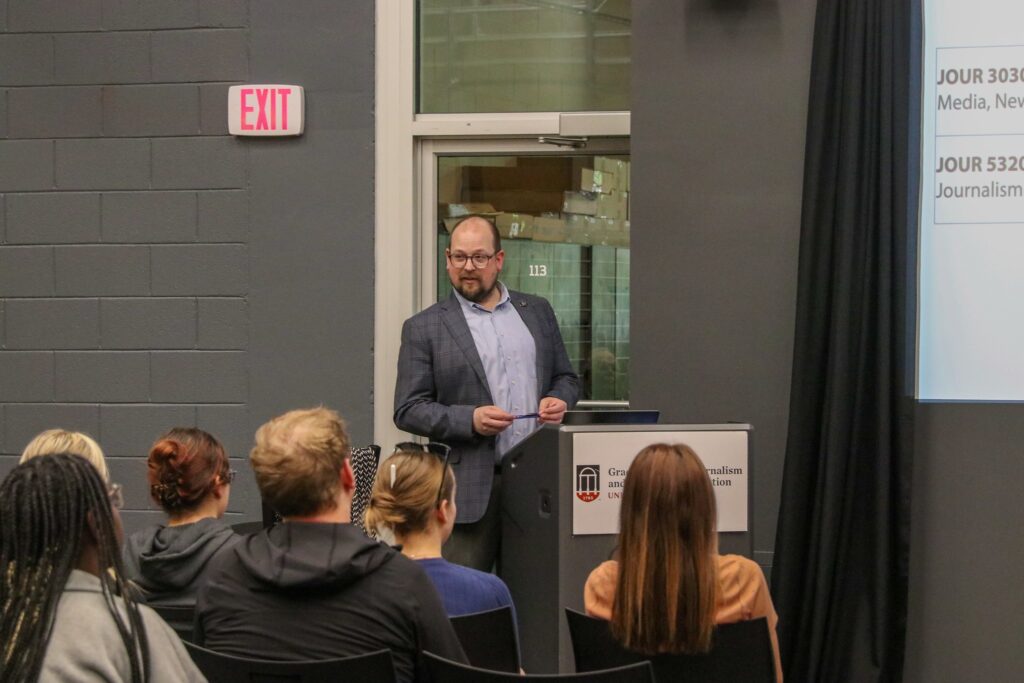
Lough also provided updates on the News Literacy Certificate program, highlighting its continued expansion and reach across majors at UGA. The certificate teaches students the skills to analyze media messages, verify information and understand how news is produced and shared.
Author: Alexis Derickson