Alumni Award Profile: Wilson Lowrey (MA ’90, PhD ’00)
Alumni Award Profile: Wilson Lowrey (MA ’90, PhD ’00)
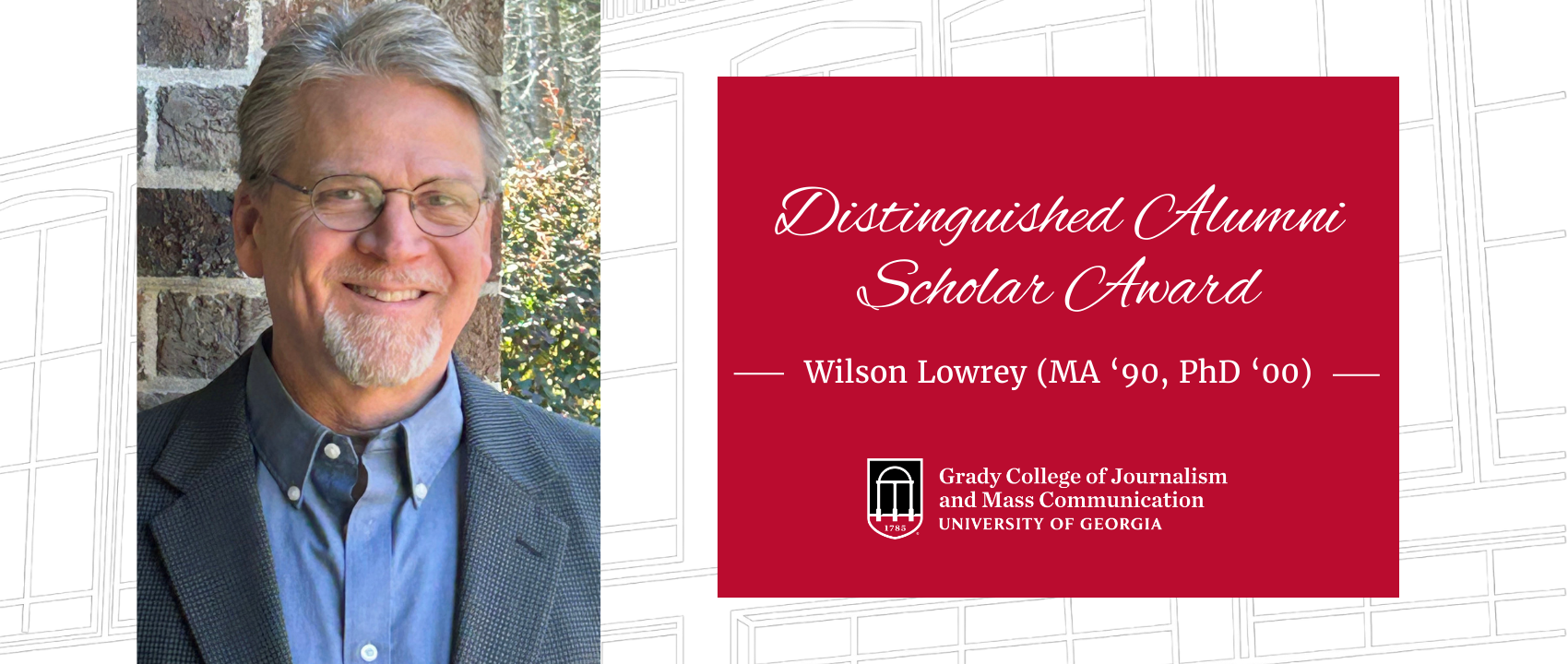
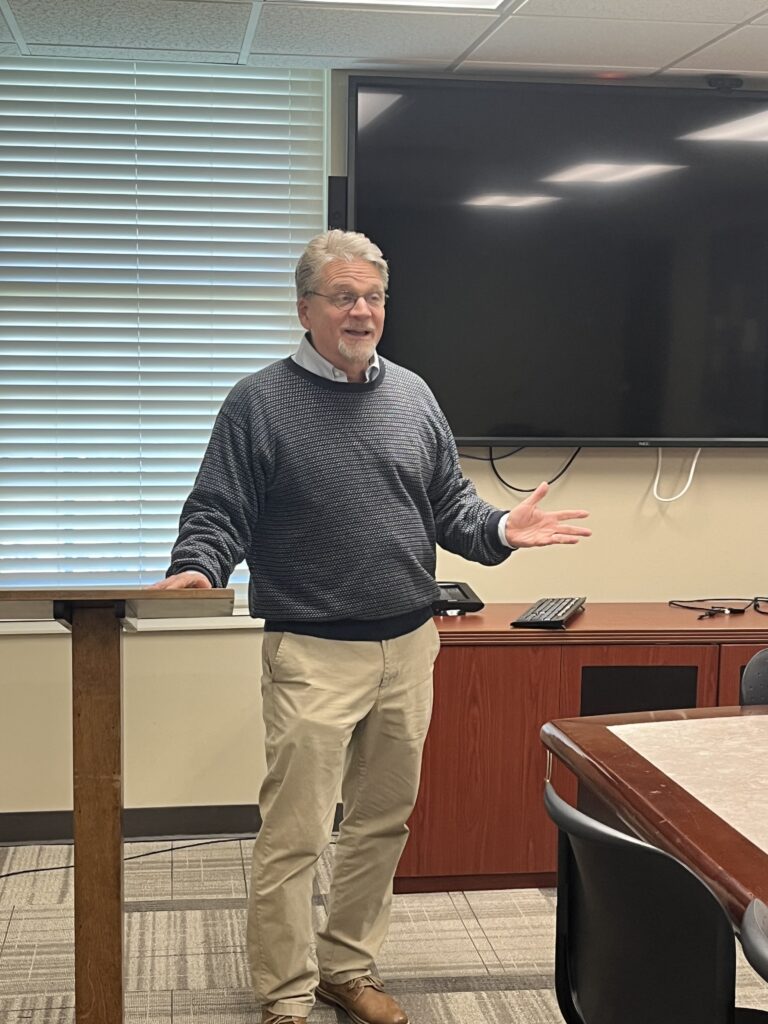
Wilson Lowrey is a professor in the Department of Journalism and Creative Media at the University of Alabama. He earned a B.A. in English from Davidson College in 1985, an M.A. in Mass Communication from Grady College in 1990, and a Ph.D. in Mass Communication from Grady College in 2000.
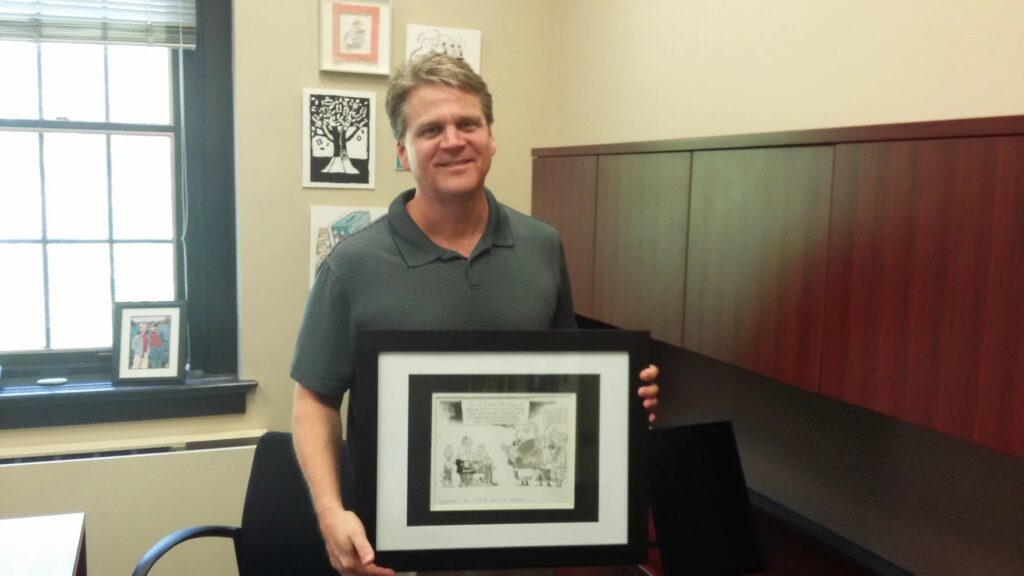
Prior to earning his Ph.D., Lowrey worked seven years in newspapers: two years at the Athens Daily News, where he drew political cartoons, and five years at the Atlanta Constitution. In 2003, he joined the faculty at the University of Alabama after three years at Mississippi State University.
Lowrey served as Chair of UA’s Department of Journalism from 2013 to 2016 and as the department’s Reese Phifer Fellow from 2018 to 2021. He was the AEJMC Newspaper & Online News Division’s Educator of the Year in 2013. Lowrey has authored or co-authored over 80 scholarly publications, including several books: “Changing the News: The Forces Shaping Journalism in Uncertain Times,” “Media Management: A Casebook Approach” and Russian Regional Journalism: Struggle and Survival in the Heartland.
Lowrey is now being awarded with Grady College’s Distinguished Alumni Scholar Award, which honors alumni for excellence and sustained contributions to scholarship in journalism and mass communication education.
Following are excerpts from an interview with Lowrey.
How did your time at Grady College shape where you are today?
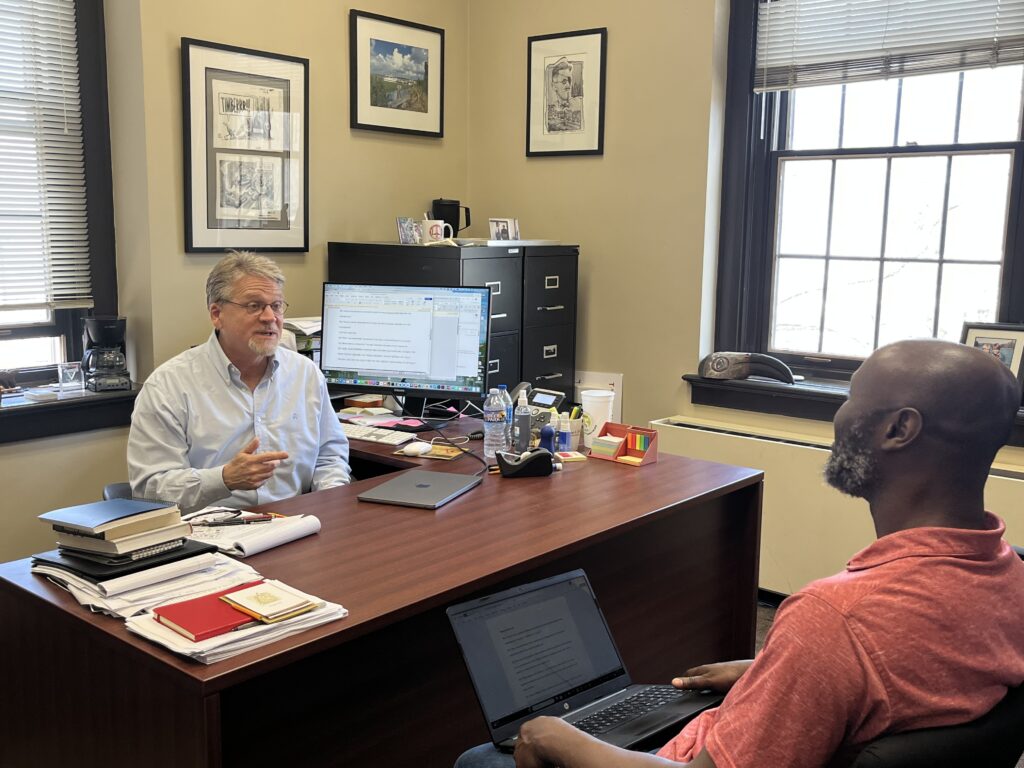
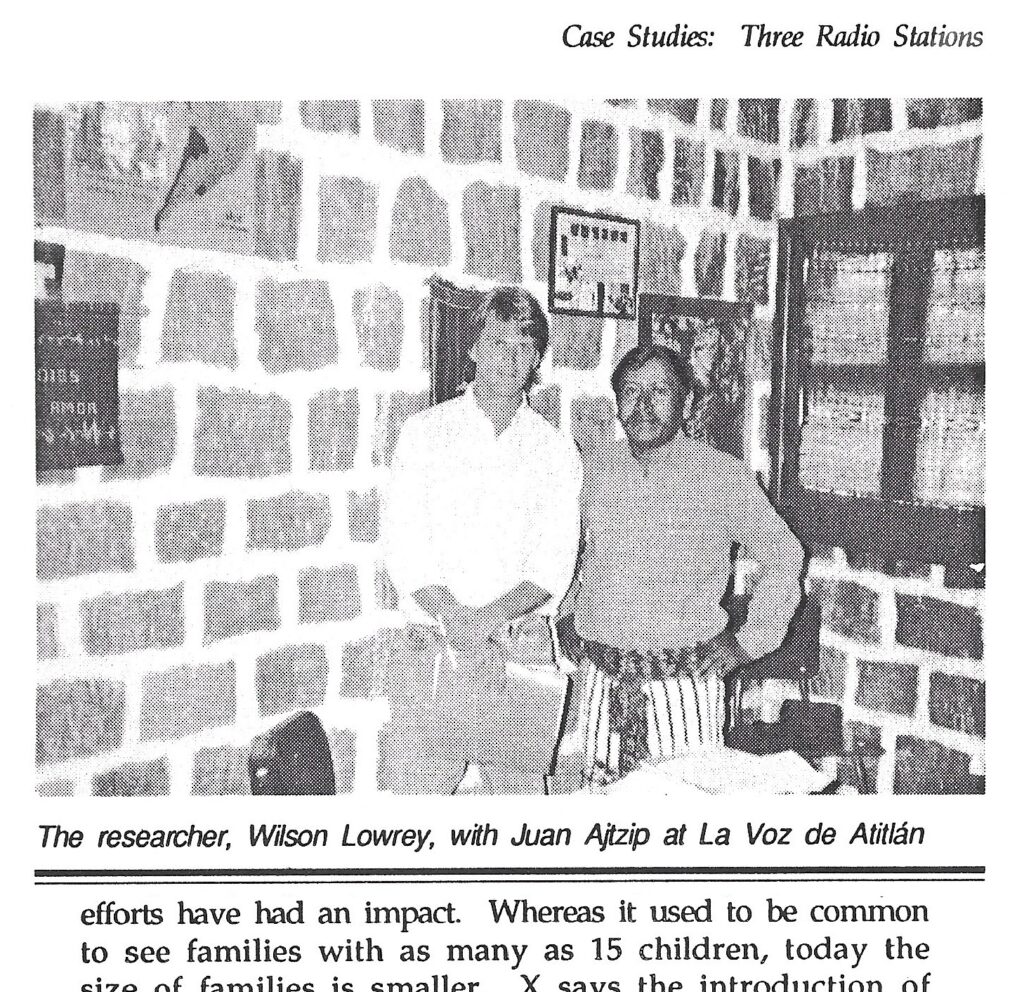
My entire career, I’ve drawn on experiences and knowledge gained at Grady. As a master’s student, I got my first real taste of research from working with Al Hester on a study of Guatemalan radio, and my first taste of teaching as Robert Willett’s assistant in Grady’s graphics lab. These valuable experiences whetted my appetite for a return to Grady after seven years in newspapers, this time to seek a Ph.D. I’m grateful to faculty across the College who helped guide me from newsroom to academy: Bill Griswold, Barry Hollander, Ann Hollifield, Len Reid, among others. Foremost, I’m grateful for the wise guidance of my doctoral mentor, Lee Becker. Lee took me further down the path, showing me what it means to pursue research as a career and teaching me the finer points of doing research. He mentored me with patience and good sense, providing opportunities and autonomy. His mentoring has served as a model for my own work with graduate students.
And Grady played matchmaker. I met my wife and life-long best friend Mary Loyd in Grady’s master’s program, and we’re in the midst of living happily ever after.
What advice do you have for today’s Grady College students?
Be curious, read widely. Chase a few rabbits. And here’s some niche advice, in two parts. It’s important to master the practices of professional media presentation, and as a former news designer, I have some cred for that claim. But, in your everyday, walking-around lives, focus less on presenting and more on experiencing and doing.
What would you tell your 20-year-old self?
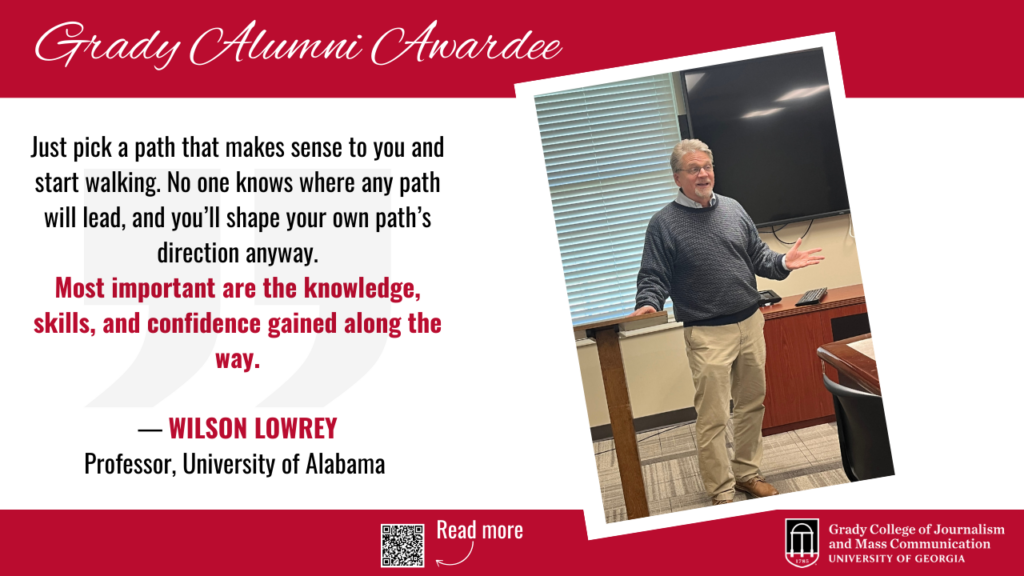
Just pick a path that makes sense to you and start walking. No one knows where any path will lead, and you’ll shape your path’s direction anyway. Most important are the knowledge, skills and confidence gained along the way.
What motivates you?
In my research, I’m motivated by talking with others and reading their works, and by the note-scribbling and thinking-aloud that follow. All of this sparks new ideas and new projects. Shared assumptions motivate me, too, because I question them. When the journalism field starts to herd in one direction, I get uneasy and start searching for reasons why.
What are the most important skills communicators should master?
I’ll highlight two. One is the ability to put yourself in the shoes of others, to have empathy. The ability to think like your audience is critical to clear and effective communication. Empathy is also critical for doing the right thing. Sometimes news stories inflict pain, and that pain can serve the public good. But journalists should always feel or be aware of that pain.
The second is the ability to balance the need for clarity with the messiness of the real world. Journalists are taught to find the central threat of a story, and they’re taught that a story’s elements, from quotes and visuals, should serve that thread. That’s professional common sense. But the world out there isn’t arranged this neatly. I remember, during my newspaper days, being handed photos for a story on underfunded schools. The photos were supposed to show dilapidated school buildings, but the photos didn’t cooperate. The schools in the photos just didn’t look that bad. The photographer said he looked carefully and shot what he saw, but was directed to go back out and find cracks and stains. The real world doesn’t always cooperate with the professional desire for a straightforward message, nor should it. So, strive for accuracy more than good fit.
The 2026 Fellowship Inductees will be recognized along with the 2026 Alumni Award recipients during the annual Grady Salutes event. This year’s Grady Salutes will be a luncheon on Friday, March 27. Visit the Grady Salutes webpage for reservations.
Editor: Sarah Kate Maher, skm01341@uga.edu