

2026 Giving Voice to the Voiceless Grant recipients named
2026 Giving Voice to the Voiceless Grant recipients named
Seven University of Georgia students working on projects that create bonds of empathy and understanding have been named recipients of 2026 Giving Voice to the Voiceless grants: Andrew Tracy Caldwell, Aida Elkashes, Karry King, Chaeyoon Lee, Dominique Lowe, Adunni Noibi and Ersha Pamida.
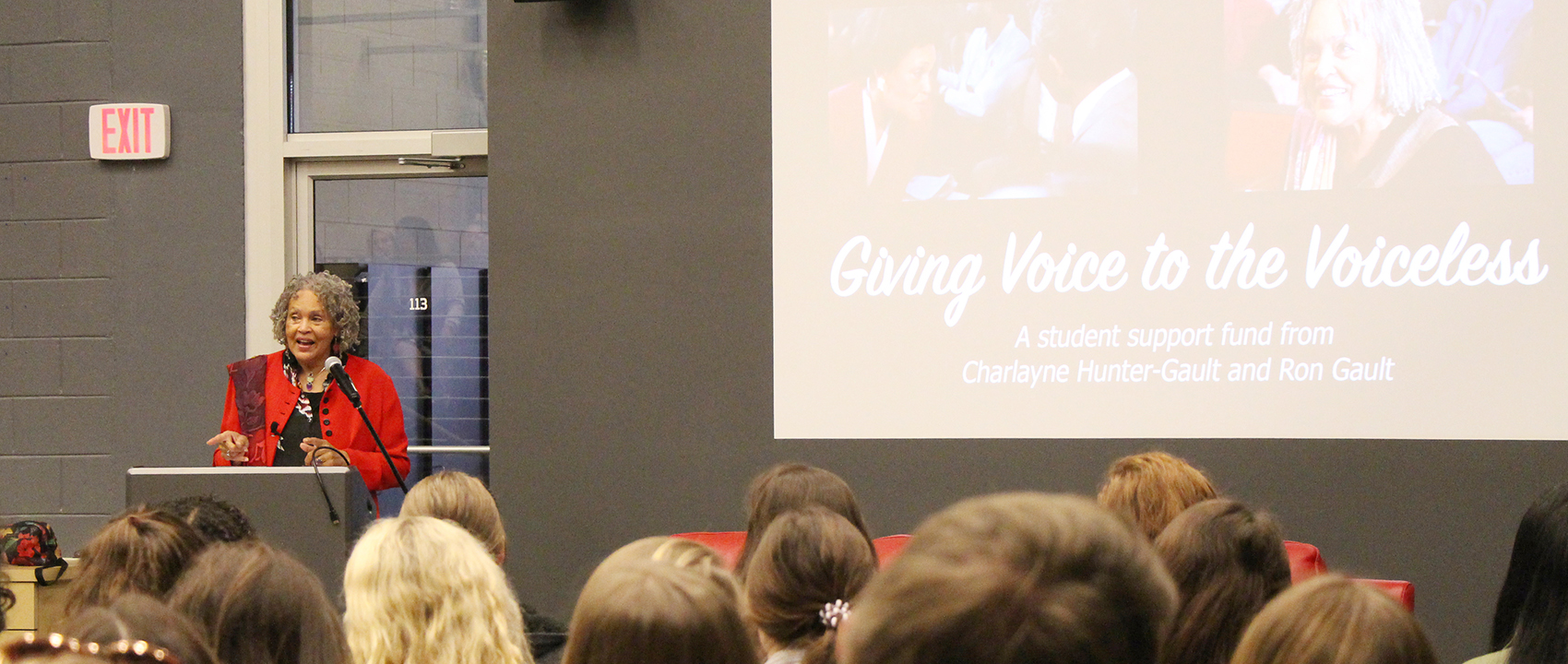
The GVV grant program was created and initially funded by Charlayne Hunter-Gault (AB ’63) and Ronald Gault to support projects by UGA students and faculty members that amplify marginalized people or issues, advance social justice and create bonds of empathy and understanding.
“I hope this fund will help students find and affirm the voices of people everywhere who fight for freedom, justice and equality for themselves and their people,” said Hunter-Gault in 2017 when she and her husband created the fund.
More than $14,000 was awarded in grants this year.
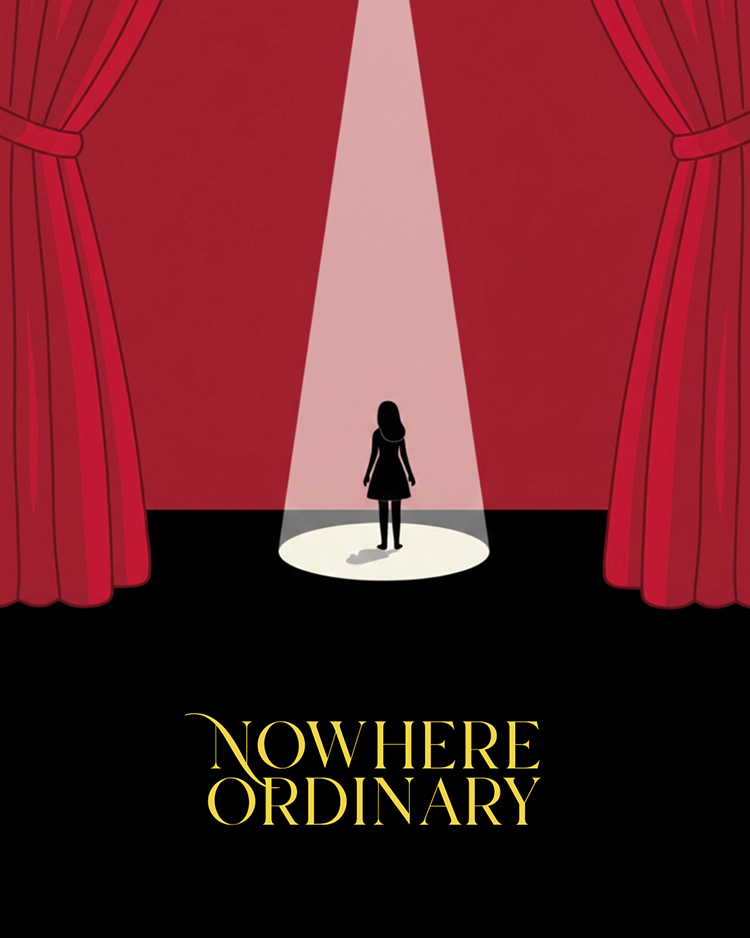
A sample of projects funded by Giving Voice to the Voiceless grants this year includes “Nowhere Ordinary,” a thesis film by Chaeyoon Lee, a student in the UGA MFA Film, Television and Digital Media program.
“Being named a recipient of the Giving Voice to the Voiceless grant means so much to me because this film comes from a very personal place,” Lee said. “It explores moments of feeling out of place, navigating cultural differences, and finding your voice in unfamiliar spaces. The support from this grant allows us to create a more honest and intimate portrayal of these experiences on screen.”
“Nowhere Ordinary” follows a young Korean immigrant in Georgia who dreams of becoming a stand-up comedian. She lives between two cultures: one in American where she is viewed as being Korean, and one in Korea where she is viewed as being American. The film explores identity, belonging and what it means to fit in.
Lee explained that the film grew out of her own experience living between Korean and American cultures.
“I’ve often found that humor, language, and even silence can feel completely different depending on the community you’re in,” Lee continued. “This film grew out of those moments when connection feels close but slightly out of reach.”
Production for the film begins in March. The Giving Voice to the Voiceless grant will help support production fees associated with the film including building the primary set, production design and hiring cast and crew to help create an authentic environment for the story.
A second project is Starved Rock Country, a writing project by Karry King, a student in the MFA Narrative Nonfiction program. King grew up in Utica, Illinois, a rural community whose farmlands are being destroyed as the search for liquified natural gas, a substance that is exported, is taking place. King has found that rural communities have little voice when it comes to mining for substances like LNG.
“There’s been little to no coverage on this,” King says. “The ecological consequences and potential impact on our food system are substantial.”
After attempting to interest journalists in telling the story, King received several rejections, in part because the story takes place in a rural location far from an urban area. She decided to enroll in the MFA Narrative program at UGA and tell the story herself.
“What I want the most from this story is for people to have a better understanding of rural communities and some empathy for farmers,” King says. “The urban-rural divide and misunderstandings of different ways of life are the cause of much strife in our country.”
King, who now lives in Florida, plans to use the grant money for expenses related to travel to Utica.
Her ultimate goal is to turn the features into a book.
Author: Sarah Freeman, freemans0@uga.edu
Giving Voice to the Voiceless grants rely on support from contributors. With a gift to the Giving Voice to the Voiceless Fund, you can help students engage in meaningful work in the world while they are students, sharing the voices they discover with others through experiential learning, a top academic priority of the University and the College. 
Impact Giving Voice to the Voiceless